Red or dry-looking eyes can occur after cannabis use, but the appearance alone does not identify the cause. The evidence is about possible ocular effects and mechanisms; it does not establish that every episode is harmless or caused by THC.
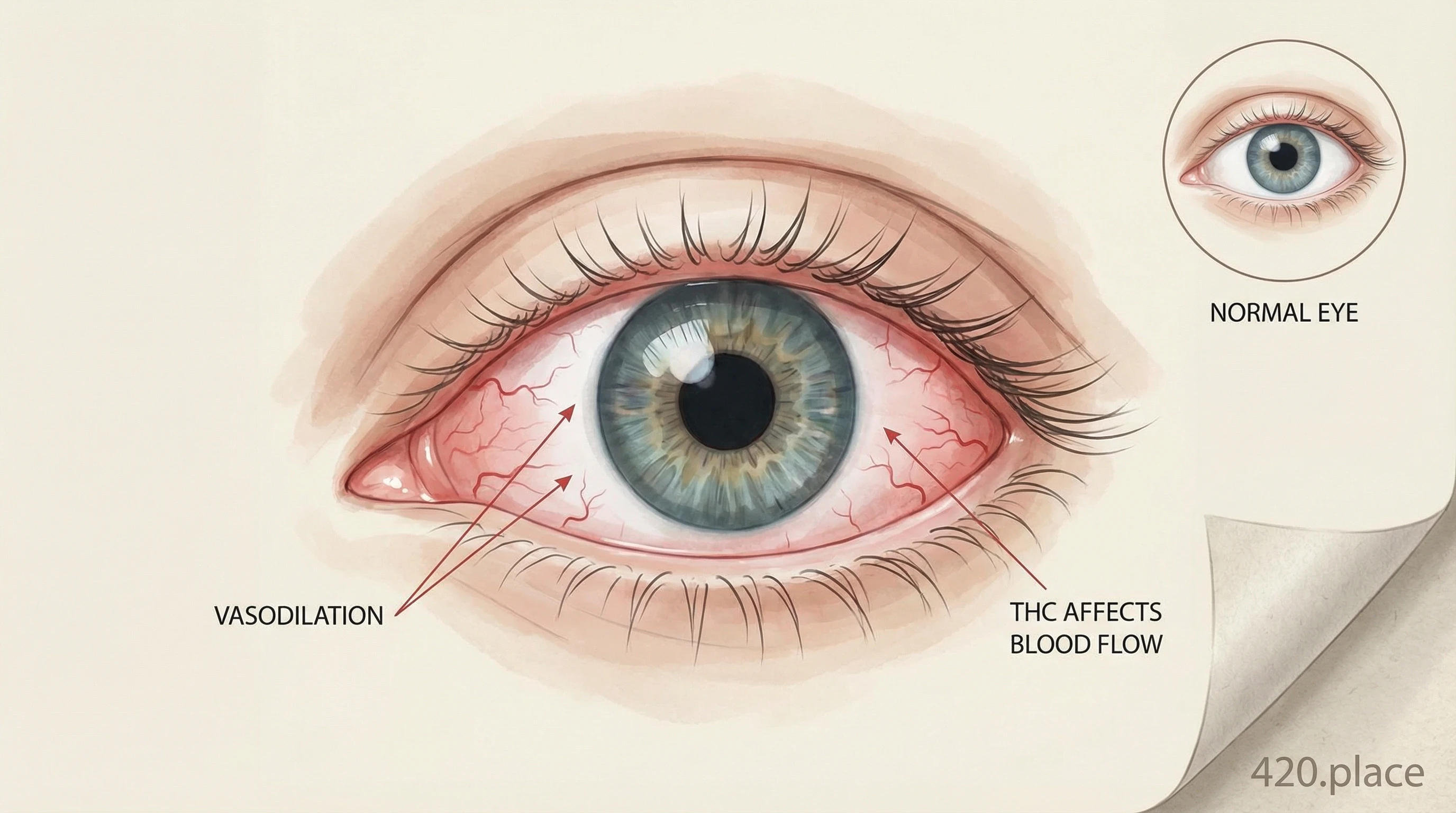
What to notice
Record when the redness began, whether one or both eyes are affected, whether there is pain or discharge, and whether vision changed. Dryness, irritation, allergies, contact lenses, smoke, infection, and environmental exposure can produce similar symptoms. Avoid rubbing the eye and remove contact lenses if they are uncomfortable. Do not drive or perform a hazardous task if you feel impaired; eye appearance is not a reliable measure of impairment.
When redness needs medical attention
Seek prompt professional advice for significant pain, light sensitivity, sudden vision change, injury, marked swelling, pus-like discharge, or symptoms that persist or worsen. People with eye disease, recent eye surgery, or medicines that affect the eyes should not assume cannabis explains a new symptom. The CDC cannabis data and research hub is a public-health starting point, while PubMed can help locate newer studies; neither is a substitute for an eye examination.
Practical, low-risk steps
Move away from smoke or other irritants, rest in a comfortable environment, and use only eye products recommended by a pharmacist or clinician. Do not share eye drops and do not use someone else's prescription medicine. "Redness relief" products can have cautions and do not diagnose the cause. If the same reaction repeats, bring the product label and a symptom timeline to a clinician.
This is an educational guide, not a diagnosis or treatment plan. The available research supports careful observation and clear escalation advice, not a guaranteed explanation, cure, or consumer dosing instruction. Persistent or one-sided symptoms deserve attention even when cannabis was used shortly beforehand. Keeping a photo and a short symptom timeline can make a clinical conversation clearer, but should not delay urgent care.
Use symptoms, not appearance, to decide next steps
A photograph and short timeline can help document when redness began, but neither confirms its cause. Record pain, discharge, light sensitivity, visual change, contact-lens use, smoke exposure, and whether one or both eyes are affected. Follow the Responsible Use guide for impairment and urgent-safety boundaries, and do not drive because the eyes look normal again. Sudden vision change, significant pain, injury, or worsening symptoms warrants professional assessment. This page offers an evidence-bounded observation checklist, not a diagnosis or treatment. Keep the cited review and its publication date with the draft so an operator can distinguish current evidence from familiar but unsupported explanations. Recurrent episodes also deserve documented review.