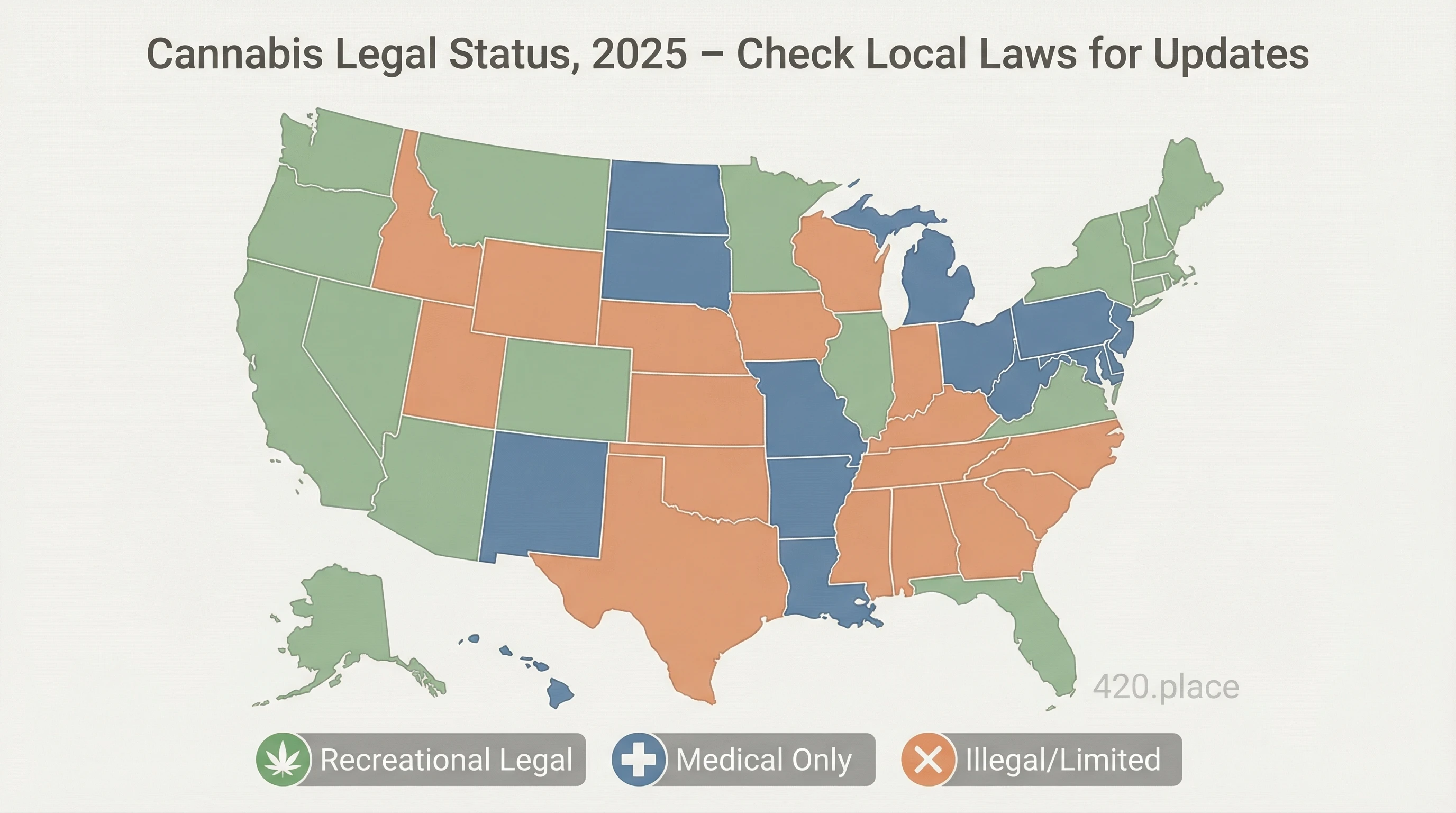
Ohio Marijuana Card Guide 2026
Last updated: June 18, 2026
Note: Ohio legalized recreational marijuana in December 2023, but medical cards still offer significant benefits. This guide covers both the medical marijuana program and how it compares to recreational access.
Quick Summary
Ohio operates dual medical and recreational marijuana programs. Adults 21 and older can purchase recreational cannabis without a card. However, medical cardholders enjoy important advantages: lower taxes, higher purchase limits, access to stronger products, and employment protections.
Ohio's Medical Marijuana Control Program (OMMCP) recognizes 26 qualifying conditions, including a broad chronic pain category. The application fee dropped from $50 to just $0.01 in March 2025, making Ohio one of the most affordable medical cannabis programs in the United States.
Obtaining a medical card requires a physician's certification (available via telemedicine), online registration through the Ohio Medical Marijuana Registry, and payment of the nominal fee. Cards are valid for one year and renewal follows the same process. Processing is immediate--you receive your digital card within minutes of completing the application.
Why Get a Medical Card in Ohio?
Ohio legalized recreational marijuana through Issue 2 in November 2023, with sales beginning December 2023. Adults 21 and older can purchase cannabis from licensed dispensaries without a medical card.
So why bother getting a medical card?
Benefits of Medical Card Over Recreational
Tax savings: Recreational cannabis carries a 10% excise tax plus local sales tax (typically 5.75-8%). Medical marijuana is exempt from the 10% excise tax, saving you approximately 10% on every purchase.
Higher purchase limits: Medical patients can purchase up to a 90-day supply (calculated based on your physician's recommendation). Recreational users are limited to 2.5 ounces of flower or equivalent per transaction.
Access to stronger products: Medical dispensaries can sell higher-potency edibles and concentrates than recreational shops. Some products are medical-only.
Employment protections: Ohio law prohibits employers from discriminating against medical marijuana cardholders for off-duty use, with exceptions for safety-sensitive positions. Recreational users have no such protections.
Younger patients: Medical cards are available to patients under 21 with qualifying conditions. Recreational access is limited to 21+.
Reciprocity: Some states recognize Ohio medical marijuana cards, allowing you to purchase medical cannabis when traveling. Recreational users have no interstate recognition.
Priority access: During high-demand periods, some dispensaries prioritize medical patients or offer medical-only hours.
For frequent users or those with serious qualifying conditions, the medical card pays for itself quickly through tax savings alone.
Qualifying Medical Conditions
Ohio's Medical Marijuana Control Program recognizes 26 specific qualifying conditions. Physicians can also recommend cannabis for any chronic or debilitating condition that produces severe or chronic pain.
Complete List of Qualifying Conditions
- AIDS (Acquired Immune Deficiency Syndrome)
- Alzheimer's disease
- Amyotrophic lateral sclerosis (ALS, Lou Gehrig's disease)
- Cancer
- Chronic traumatic encephalopathy (CTE)
- Crohn's disease
- Epilepsy or other seizure disorder
- Fibromyalgia
- Glaucoma
- Hepatitis C
- Inflammatory bowel disease
- Multiple sclerosis
- Pain that is either chronic and severe or intractable
- Parkinson's disease
- Positive status for HIV (Human Immunodeficiency Virus)
- Post-Traumatic Stress Disorder (PTSD)
- Sickle cell anemia
- Spinal cord disease or injury
- Tourette's syndrome
- Traumatic brain injury
- Ulcerative colitis
- Complex Regional Pain Syndrome
- Cachexia (severe weight loss and muscle wasting)
- Terminal illness
- Opioid use disorder (for cannabis as an alternative treatment)
- Anxiety disorders
Understanding the Chronic Pain Category
"Chronic and severe or intractable pain" is Ohio's broadest qualifying category. This includes:
Chronic pain: Persistent pain lasting longer than 3-6 months that interferes with daily activities. Common examples include arthritis, back pain, migraines, neuropathy, and fibromyalgia.
Severe pain: Intense pain from any cause that significantly impairs quality of life.
Intractable pain: Pain that does not respond adequately to conventional treatments.
Physicians have discretion to certify patients for chronic pain based on medical history, previous treatments, and pain impact on daily functioning. You do not need a specific diagnosis if you experience qualifying pain.
Step-by-Step Medical Card Application
Step 1: Register as a Patient with the Ohio Medical Marijuana Registry
Visit the Ohio Medical Marijuana Control Program website at https://www.medicalmarijuana.ohio.gov/ and create a patient account.
You will need:
- Valid Ohio government-issued ID (driver's license, state ID)
- Proof of Ohio residency (if your ID does not show an Ohio address)
- Email address
After creating your account, you receive a patient registration number. Keep this number--you will provide it to your physician during certification.
Step 2: Obtain a Physician Certification
Only physicians registered with Ohio's Medical Marijuana Control Program can certify patients. The state registry lists currently registered physicians; verify the physician and certification route before booking.
Finding a registered physician:
- The OMMCP website maintains a searchable physician directory
- Search by city, county, or specialty
- Many clinics specialize in medical marijuana certifications
Telemedicine options: Ohio allows telemedicine consultations for medical marijuana certifications. Video visits offer convenience and accessibility, especially for rural patients or those with mobility challenges.
What to expect:
- Bring medical records documenting your qualifying condition
- Appointments typically last 15-30 minutes
- The physician reviews your condition and discusses whether cannabis is appropriate
- Costs range from $150-$250 for initial certification
Certification process: After the appointment, the physician enters your certification into the Ohio Medical Marijuana Registry using your patient registration number. The certification includes:
- Your qualifying condition(s)
- Recommended 90-day supply limit (in "days of therapy")
- Duration of certification (up to one year)
You do not receive a physical document. The certification is electronic and immediately accessible in the registry.
Step 3: Complete Your Application and Pay the Fee
Once your physician submits your certification, log into your patient account on the OMMCP website. Complete the application by:
- Verifying your personal information
- Uploading a recent photo (passport-style, against a white background)
- Paying the $0.01 application fee (yes, one penny)
Payment options include credit card, debit card, or electronic check. The nominal fee ensures the registry maintains compliance with state law requiring fees for state programs.
Step 4: Receive Your Digital Card Immediately
After submitting payment, your medical marijuana card is issued immediately. You can:
- Download a PDF version of your card
- View your card in your online patient portal
- Print a physical copy at home
- Show the digital version on your smartphone at dispensaries
Your card includes:
- Your name and photo
- Patient ID number
- Expiration date (one year from issuance)
- QR code for dispensary verification
Total processing time from payment to card receipt: minutes. This is one of the fastest medical marijuana card issuance systems in the United States.
Required Documents
The Ohio medical marijuana application requires minimal documentation:
For online registration:
- Valid Ohio driver's license or state ID
- Proof of Ohio residency (utility bill, lease agreement, bank statement) if ID does not show current Ohio address
For physician certification:
- Medical records documenting qualifying condition (if available)
- List of current medications
- Government-issued photo ID
For final card application:
- Digital photo (passport-style, JPEG or PNG format)
- Payment method for $0.01 fee
Costs and Affordability
State Application Fee: $0.01
In March 2025, Ohio reduced its medical marijuana card fee from $50 to $0.01. This makes Ohio's program the most affordable state medical marijuana program by application cost.
The nominal fee fulfills legal requirements for state program fees while removing financial barriers for patients.
Physician Certification Costs
- Initial certification: $150-$250
- Follow-up appointments: $100-$200 (if required before annual renewal)
- Telemedicine consultations: Usually same price as in-person visits
Some physicians offer package pricing for initial certification plus renewal.
Product Costs at Dispensaries
Medical marijuana product prices in Ohio vary by dispensary and product type. Typical costs:
- Flower (2.83g, 1/10 oz): $30-$50
- Flower (14.15g, half oz): $120-$180
- Vape cartridges (0.5g): $40-$70
- Edibles (gummies, chocolates): $25-$50 per package
- Tinctures (30mL bottle): $60-$100
- Concentrates (1g): $50-$90
Medical patients save approximately 10% compared to recreational prices due to tax exemption.
Annual Costs
- Year 1: $150-$250 (physician) + $0.01 (state fee) = ~$150-$250 total
- Renewal years: $150-$250 (physician) + $0.01 (state fee) = ~$150-$250 total
Tax savings for regular users often exceed these costs within the first month.
Understanding Ohio's 90-Day Supply Limits
Ohio calculates purchase limits in "days of therapy" rather than ounces or grams. This system accounts for different product types and patient needs.
How Days of Therapy Work
When your physician certifies you, they specify a 90-day supply recommendation. This is converted to "days of therapy" for different product types:
Flower: 1 day = 2.83 grams (approximately 1/10 ounce)
- 90-day supply = 254.7 grams (approximately 9 ounces)
THC oils and edibles: 1 day = 590mg of THC
- 90-day supply = 53,100mg THC
THC concentrates: 1 day = 295mg of THC
- 90-day supply = 26,550mg THC
Topicals: No limits (topicals do not count against days of therapy)
Example Calculation
If you purchase 8.49 grams of flower (3 days), one 500mg THC vape cartridge (0.85 days), and one package of 100mg THC edibles (0.17 days), you use approximately 4 days of your 90-day supply.
Dispensaries track your purchases automatically. The system prevents purchases exceeding your 90-day limit.
Recreational Purchase Limits
Recreational users face strict per-transaction limits:
- 2.5 ounces (70.87g) of flower, OR
- 15 grams of concentrate, OR
- Equivalent amounts of edibles/other products
Medical patients' 90-day supply (approximately 9 ounces of flower) far exceeds recreational limits.
Using Your Medical Marijuana Card
At Ohio Dispensaries
Ohio licenses dozens of medical and adult-use dispensaries statewide. Most serve both medical and recreational customers.
When visiting a dispensary:
- Bring your medical marijuana card (digital or printed) and government-issued ID
- Check in with staff and indicate you are a medical patient
- Budtenders help you select products within your 90-day supply limits
- Medical purchases are tracked automatically in the state system
- Pay with cash or debit card (credit cards are rarely accepted)
Medical patients often have access to:
- Medical-only product lines
- Higher-potency options
- Dedicated medical hours or lines
- Compassionate care pricing programs
Possession Limits
With a medical card, you can possess:
- Up to a 90-day supply as calculated by the OMMCP
- Approximately 9 ounces of flower (if your entire 90-day supply is flower)
- Equivalent amounts in other product forms
Keep products in original packaging with dispensary labels showing:
- Product name and type
- THC/CBD content
- Batch number and testing information
- Dispensary name
Home Cultivation
Medical marijuana patients cannot grow cannabis at home in Ohio. Home cultivation remains illegal for both medical and recreational users.
Renewal Process
Medical marijuana cards expire one year from the date of issuance. Renewal requires a new physician certification.
Renewal Steps
- Schedule a physician appointment 30-60 days before expiration (some physicians require appointments, others allow renewals without visits)
- Obtain new certification from registered physician (physician enters certification into registry)
- Log into your patient portal on the OMMCP website
- Update photo if needed (new photo required if appearance changed significantly)
- Pay $0.01 renewal fee
- Receive renewed card immediately
Some physicians offer streamlined renewal consultations at reduced cost ($100-$150) if your condition and treatment are stable.
The OMMCP sends renewal reminder emails 60 and 30 days before expiration. If your card expires, you lose medical patient protections and pricing until renewal.
Medical vs. Recreational: Detailed Comparison
| Feature | Medical Card | Recreational (21+) |
|---|---|---|
| Minimum Age | Any age (minors need guardian consent) | 21+ only |
| Application Process | Physician certification + online registration | None |
| Cost | ~$150-$250/year (physician + $0.01 fee) | $0 |
| Taxes | Exempt from 10% excise tax | 10% excise + sales tax |
| Purchase Limits | 90-day supply (~9 oz flower) | 2.5 oz per transaction |
| Product Access | Medical-grade high-potency products | Standard adult-use products |
| Employment Protections | Protected from discrimination (with exceptions) | No protections |
| Reciprocity | Recognized in some states | Not recognized |
| Home Cultivation | Prohibited | Prohibited |
| Public Consumption | Prohibited | Prohibited |
| Driving While Impaired | Illegal (no protection) | Illegal |
Employment Protections for Medical Patients
Ohio law provides limited employment protections for medical marijuana cardholders:
What Is Protected
- Employers cannot refuse to hire or terminate employees solely for being registered medical marijuana patients
- Employers cannot discipline employees for off-duty medical marijuana use
- Employers must accommodate medical marijuana use outside of work hours (similar to prescription medication)
Exceptions
Employers can still:
- Prohibit marijuana use during work hours
- Maintain drug-free workplace policies
- Enforce federal requirements (Department of Transportation regulations, federal contractors)
- Discipline employees in safety-sensitive positions (commercial drivers, heavy machinery operators, healthcare roles)
- Take action if an employee is impaired at work
Drug Testing
Employers can conduct drug testing. A positive THC test alone cannot be the sole reason for termination of a medical cardholder, but employers can take action if:
- The employee is impaired at work
- The position is safety-sensitive
- Federal law requires drug-free status
Recreational users have no such protections. Employers can freely terminate recreational users for positive drug tests.
Traveling with Medical Marijuana
Within Ohio
You can travel anywhere in Ohio with medical marijuana in your possession, as long as:
- You stay within your 90-day supply limits
- Products remain in original dispensary packaging
- You carry your medical marijuana card and ID
If stopped by law enforcement, present your card and explain you are a registered patient.
Out of State
Federal law prohibits transporting cannabis across state lines, even between two legal states. Do not take cannabis on planes, trains, or across state borders.
Reciprocity with other states: Some states with medical programs recognize Ohio medical marijuana cards. Reciprocity policies change frequently. Reciprocity rules are state-specific and change frequently. Check each destination state official program before relying on an Ohio card. Examples to verify include:
- Arizona
- Arkansas
- Michigan
- Nevada
- Pennsylvania
- Rhode Island
- Utah
Check current reciprocity agreements before traveling. You may need to register as a visiting patient in some states.
Frequently Asked Questions
Do I still need a medical card if recreational is legal?
It depends on your usage and priorities. Frequent users save money through tax exemptions. Medical cards provide employment protections, higher purchase limits, and access to stronger products. For occasional users, recreational access may be sufficient.
Can I get a medical card for anxiety?
Yes. Anxiety disorders are a qualifying condition in Ohio. Discuss your symptoms and treatment history with a registered physician.
How long does it take to get a card?
Once your physician submits your certification, you can complete the online application and receive your card within minutes. Total timeline from scheduling a physician appointment to receiving your card: typically 1-2 weeks (depending on appointment availability).
Can I use my card at any Ohio dispensary?
Yes. All licensed Ohio dispensaries serve medical patients. Some dispensaries are medical-only (especially those that opened before recreational legalization).
What if I move to a different state?
Your Ohio medical marijuana card is valid only in Ohio (and states with reciprocity agreements). If you move, you must apply for a medical card in your new state.
Can I be fired for having a medical card?
Not solely for having a medical card. However, employers can terminate you for being impaired at work, working in safety-sensitive positions, or violating federal requirements. Off-duty use by medical cardholders is generally protected.
Keep Learning
- Getting started: 420.place Start Guide for Beginners 50+
- Product types: Cannabis Product Types Guide
- Dosing guidance: Beginner Cannabis Dosing Guide
- Safety: Cannabis Drug Interactions with Medications
- Other states: Pennsylvania Medical Marijuana Card Guide, California Medical Marijuana Card Guide
Official Ohio Sources
- Ohio Medical Marijuana Control Program: https://www.medicalmarijuana.ohio.gov/
- Patient Registration Portal: https://www.ohiomedicalmarijuanaregistry.com/
- Ohio Board of Pharmacy (program oversight): https://www.pharmacy.ohio.gov/marijuana
- Find Registered Physicians: https://www.medicalmarijuana.ohio.gov/patients/FindADoctor
- Licensed Dispensary List: https://www.medicalmarijuana.ohio.gov/dispensaries
- Ohio Revised Code Chapter 3796 (medical marijuana law): https://codes.ohio.gov/ohio-revised-code/chapter-3796