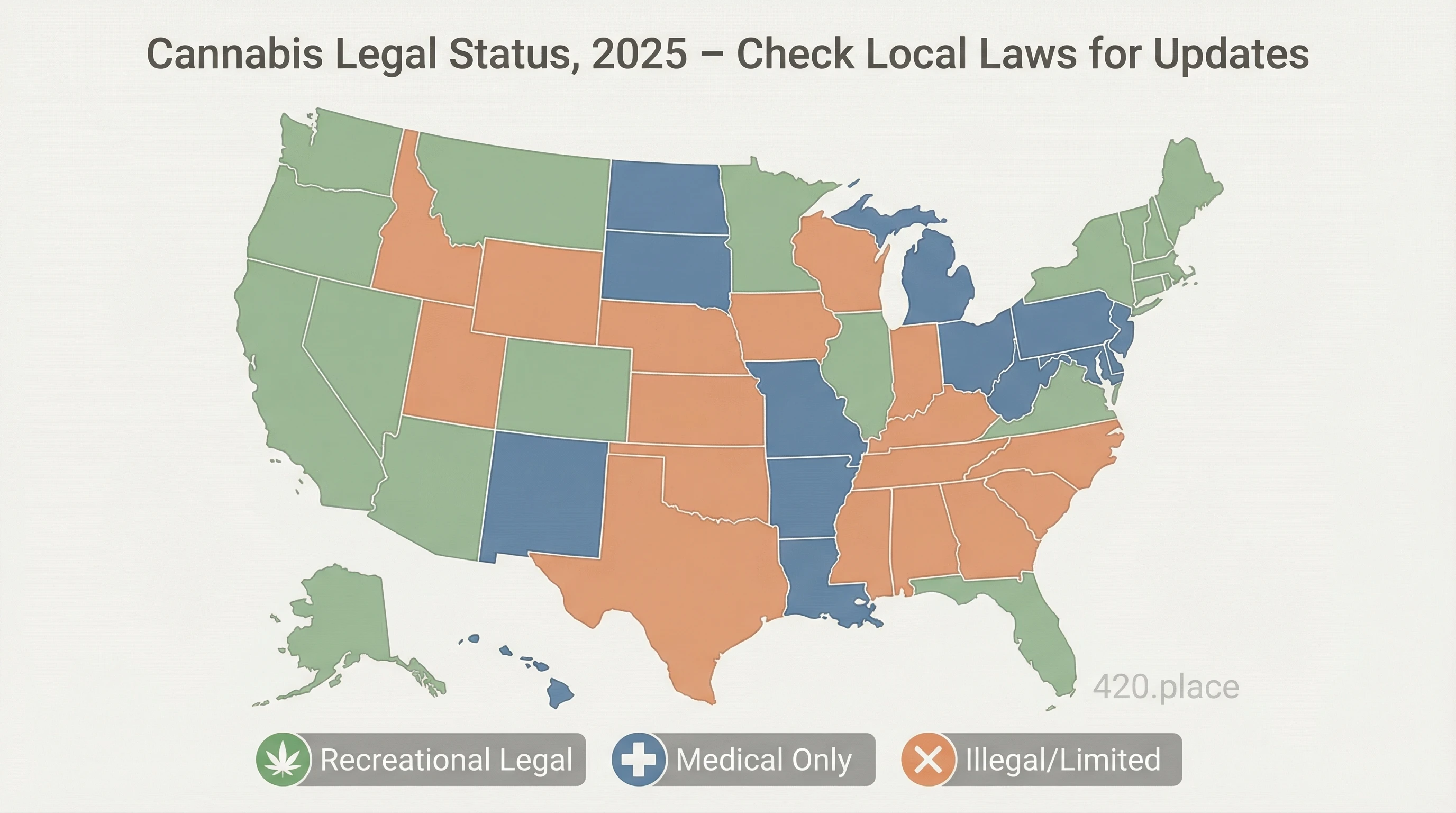
Pennsylvania Medical Marijuana Card Guide 2025
Last updated: December 11, 2025
Note: Pennsylvania cannabis laws change periodically. Always verify current requirements on the official Pennsylvania Department of Health Medical Marijuana Program website.
Quick Summary
Pennsylvania's Medical Marijuana Program provides access to cannabis for patients with 23 serious medical conditions. The program is entirely digital--no physical card is required. Patients register online, obtain physician certification (available via telemedicine), and receive a digital ID card immediately.
The application fee is $50, with fee waivers available for patients enrolled in Medicaid, SNAP, WIC, or other assistance programs. Cards are valid for one year and must be renewed annually. Pennsylvania does not permit home cultivation or smokable flower (though vaping dried flower is legal).
As of 2025, Pennsylvania serves over 400,000 active medical marijuana patients through a network of physician certifiers and licensed dispensaries statewide. The program emphasizes patient safety, product testing, and physician oversight.
Qualifying Medical Conditions
Pennsylvania recognizes 23 specific serious medical conditions. Physicians cannot recommend medical marijuana for conditions outside this list.
Complete List of Qualifying Conditions
- Amyotrophic lateral sclerosis (ALS)
- Anxiety disorders
- Autism
- Cancer (including remission therapy)
- Crohn's disease
- Damage to the nervous tissue of the spinal cord with objective neurological indication of intractable spasticity
- Dyskinetic and spastic movement disorders
- Epilepsy
- Glaucoma
- HIV/AIDS
- Huntington's disease
- Inflammatory bowel disease
- Intractable seizures
- Multiple sclerosis
- Neurodegenerative diseases
- Neuropathies
- Opioid use disorder (for patients receiving medication-assisted treatment)
- Parkinson's disease
- Post-Traumatic Stress Disorder (PTSD)
- Severe chronic or intractable pain of neuropathic origin or severe chronic or intractable pain where conventional therapeutic intervention and opiate therapy is contraindicated or ineffective
- Sickle cell anemia
- Terminal illness
- Tourette syndrome
Understanding the Pain Category
Pennsylvania's chronic pain qualifying condition has specific requirements:
"Severe chronic or intractable pain of neuropathic origin": Pain caused by nerve damage, including diabetic neuropathy, post-herpetic neuralgia (shingles), nerve compression injuries, or chemotherapy-induced neuropathy.
"Severe chronic or intractable pain where conventional therapeutic intervention and opiate therapy is contraindicated or ineffective": Persistent severe pain that has not responded to standard treatments or where opioids are not appropriate due to side effects, addiction risk, or medical contraindications.
Physicians must document:
- Previous treatment attempts
- Why conventional therapies are inadequate or inappropriate
- Pain severity and impact on daily functioning
Chronic pain from arthritis, back injuries, or fibromyalgia may qualify if it meets these criteria, but physicians have less flexibility than in states like California or Ohio.
Three-Step Application Process
Pennsylvania's medical marijuana card process involves three main steps: patient registration, physician certification, and card payment/activation.
Step 1: Register with the PA Medical Marijuana Registry
Visit the Pennsylvania Department of Health Medical Marijuana Registry at https://www.pa.gov/en/agencies/health/programs/medical-marijuana.html and create a patient account.
You will need:
- Valid Pennsylvania driver's license or state-issued photo ID
- Proof of Pennsylvania residency (if ID does not show current address)
- Email address
During registration:
- Create username and password
- Provide personal information (name, address, date of birth)
- Answer security questions
- Verify email address
After registration, you receive a patient ID number. This number is required when scheduling your physician certification appointment.
Processing time: Immediate. You can proceed to Step 2 right away.
Step 2: Get Certified by a Registered Physician
Only physicians approved by the Pennsylvania Department of Health can certify patients for medical marijuana. As of late 2025, over 1,800 practitioners are registered statewide.
Finding a registered physician:
- Search the DOH practitioner directory at https://www.health.pa.gov/topics/programs/Medical%20Marijuana/Pages/Find-a-Practitioner.aspx
- Search by county, city, or zip code
- Many practices specialize in medical marijuana certifications
- Some primary care doctors and specialists also offer certifications
Telemedicine options: Pennsylvania allows telemedicine consultations for medical marijuana certifications. Video visits offer convenience for patients with mobility issues or those in rural areas.
What to expect at your appointment:
- Bring medical records documenting your qualifying condition
- Appointments typically last 15-30 minutes
- The physician reviews your medical history, current medications, and treatment attempts
- Physician discusses whether cannabis is appropriate and what to expect
- Costs range from $125-$250 for initial certification
After certification: The physician submits your certification directly to the Medical Marijuana Registry using your patient ID number. Certification includes:
- Your qualifying condition
- Recommended product forms (if physician has specific guidance)
- Certification expiration date (up to one year)
You do not receive a physical certification document. Everything is digital and immediately updated in the state registry.
Processing time: Immediate. Physician certifications appear in your patient portal within minutes.
Step 3: Pay for Your Card and Download It
Once your physician submits certification, log into your patient portal. Complete your card application:
Upload a photo:
- Recent passport-style photo
- Plain white or light-colored background
- Face forward, no hats or sunglasses
- JPEG or PNG format
Pay the $50 fee (or apply for fee waiver):
- Credit card, debit card, or electronic check accepted
- Fee covers one-year card validity
Fee waiver eligibility: If you participate in any of these programs, you qualify for a fee waiver:
- Medicaid (Medical Assistance)
- SNAP (Supplemental Nutrition Assistance Program)
- WIC (Women, Infants, and Children)
- PACE/PACENET (prescription assistance for seniors)
- Other qualifying assistance programs
To apply for fee waiver, upload documentation of program enrollment when submitting your application.
Receive your card: After payment, your medical marijuana card is issued immediately. You can:
- Download a PDF version
- View it in your patient portal
- Print a physical copy
- Show the digital version on your phone at dispensaries
Processing time: Immediate. Your card is active as soon as payment is processed.
Required Documents Summary
For patient registration:
- PA driver's license or state-issued ID
- Proof of PA residency (utility bill, lease, bank statement) if ID does not show current address
For physician certification:
- Medical records documenting qualifying condition
- List of current medications
- Previous treatment history
For card application:
- Digital passport-style photo
- Payment method ($50 fee or proof of assistance program enrollment for waiver)
Costs and Affordability
State Fees
- Card fee: $50 per year
- Fee waiver available: Free for Medicaid, SNAP, WIC, PACE/PACENET participants
Physician Certification Costs
- Initial certification: $125-$250
- Renewal certification: $100-$200 (some physicians offer reduced renewal rates)
- Telemedicine vs. in-person: Usually same price
Dispensary Product Costs
Pennsylvania dispensary prices vary by location and product type. Typical costs:
- Flower (3.5g, 1/8 oz): $45-$70
- Vape cartridges (0.5g): $50-$80
- Edibles (gummies, chocolates): $30-$60 per package
- Tinctures (30mL bottle): $70-$120
- Concentrates (1g): $60-$100
- Topicals (creams, balms): $40-$80
Pennsylvania does not charge sales tax on medical marijuana. This saves approximately 6% compared to taxed purchases.
Annual Costs
- Year 1: $125-$250 (physician) + $50 (card fee) = $175-$300 total (or $125-$250 if fee waiver applies)
- Renewal years: $100-$200 (physician) + $50 (card fee) = $150-$250 total (or $100-$200 if fee waiver applies)
Understanding Pennsylvania's Unique Product Rules
Pennsylvania's medical marijuana program has specific product restrictions that differ from other states.
No Smokable Flower
Pennsylvania prohibits smoking cannabis. Traditional dried flower that you light and smoke (joints, pipes, bongs) is illegal even for medical patients.
Vaping Dried Flower Is Legal
However, Pennsylvania allows vaporizing dried flower. Dispensaries sell dried flower specifically for vaporization using dry herb vaporizers (like the Mighty+, DynaVap, or similar devices).
This distinction is important:
- Smoking (combustion): Illegal
- Vaping (heating without combustion): Legal
Permitted Product Forms
Pennsylvania medical marijuana is available in these forms:
- Dried flower for vaporization (sold in sealed containers, 3.5g or 7g typically)
- Vape cartridges (pre-filled oil cartridges for vape pens)
- Concentrates (wax, shatter, live resin for vaporization)
- Tinctures (liquid drops, sublingual administration)
- Capsules (pills containing cannabis oil)
- Topicals (creams, balms, patches applied to skin)
- Edibles (gummies, chocolates, lozenges)
Purchase Limits
Pennsylvania does not impose strict weight-based purchase limits. Instead, dispensaries track purchases to ensure patients do not exceed a reasonable 30-day supply based on physician recommendations and product type.
Typical 30-day supply guidelines:
- Flower: 3.5-7 grams
- Concentrates: 1-3 grams
- Edibles: 300-1000mg THC
- Tinctures: 1-2 bottles
Dispensaries have discretion to limit purchases if they believe amounts exceed reasonable medical use.
Using Your Medical Marijuana Card
At Pennsylvania Dispensaries
Pennsylvania licenses over 150 dispensaries statewide. All serve medical patients only (Pennsylvania does not have recreational cannabis).
When visiting a dispensary:
- Bring your medical marijuana card (digital or printed) and government-issued ID
- First-time patients often receive consultations from pharmacists or trained staff
- Budtenders help you select products based on your qualifying condition and physician recommendations
- Payment is typically cash or debit card (credit cards rarely accepted due to federal banking restrictions)
Product selection tips:
- Ask about product labels showing THC/CBD content
- Request Certificates of Analysis (COA) showing lab testing results
- Start with low doses (2.5-5mg THC for edibles, small amounts for vaping)
- Keep a journal tracking products, doses, and effects
Possession Limits
Pennsylvania does not specify exact possession limits by weight. The law states patients can possess a "30-day supply" as recommended by their physician.
In practice:
- Keep products in original dispensary packaging
- Carry only what you reasonably need
- Avoid possessing months' worth of supply (suggests diversion/resale)
If stopped by law enforcement, present your medical marijuana card and explain you are a registered patient.
Home Cultivation
Pennsylvania does not permit home cultivation. Growing cannabis at home is illegal for medical patients and recreational users alike.
Caregivers for Patients Who Cannot Visit Dispensaries
Pennsylvania allows patients to designate caregivers who can purchase and transport medical marijuana on their behalf.
Who Needs a Caregiver?
Caregivers are intended for patients who cannot visit dispensaries due to:
- Severe disability or immobility
- Advanced age requiring assistance
- Cognitive impairment
- Incarceration (limited circumstances)
- Being a minor (under 18)
Caregiver Registration
To register a caregiver:
- Patient registers first in the Medical Marijuana Registry
- Patient designates caregiver by providing caregiver's name and email in patient portal
- Caregiver creates account and completes registration
- Caregiver pays $50 fee (or applies for fee waiver)
- Caregiver undergoes background check (processing takes 1-2 weeks)
- Caregiver receives digital ID card after approval
Caregiver restrictions:
- Must be 21+ years old
- Can serve up to 5 patients maximum
- Cannot have drug-related criminal convictions
- Must carry caregiver ID card when purchasing/transporting medical marijuana
Renewal Process
Medical marijuana cards expire one year from issuance. Renewal requires a new physician certification and payment of the $50 fee.
Renewal Steps
- Schedule physician appointment 30-60 days before expiration
- Obtain new certification from registered practitioner (physician submits electronically)
- Log into patient portal and verify information is current
- Update photo if needed
- Pay $50 renewal fee (or apply for fee waiver)
- Download renewed card immediately
The Pennsylvania DOH sends renewal reminder emails 60 and 30 days before expiration.
If your card expires, you cannot legally purchase or possess medical marijuana until renewal. Some physicians offer streamlined renewal consultations (shorter appointments at reduced cost) for stable patients.
Employment and Legal Protections
Employment Rights
Pennsylvania law provides limited employment protections for medical marijuana cardholders:
Protected:
- Employers cannot refuse to hire or terminate employees solely for being registered medical marijuana patients
- Off-duty medical marijuana use is generally protected
Not protected:
- Employees impaired by marijuana at work
- Safety-sensitive positions (commercial drivers, heavy equipment operators, healthcare roles involving patient safety)
- Positions subject to federal drug-free workplace requirements (DOT, federal contractors)
Drug Testing
Pennsylvania employers can conduct drug testing. However:
- A positive THC test alone cannot be the sole basis for termination if you are a registered medical marijuana patient
- Employers must show impairment at work or safety concerns
- Pre-employment drug testing for THC is complicated (consult employment attorney if needed)
Driving and DUI
It is illegal to drive while impaired by marijuana. Pennsylvania law prohibits driving with:
- Any amount of marijuana in your system if you are impaired
- Schedule I controlled substances in your blood (marijuana is Schedule I federally)
Medical marijuana patients are not exempt from DUI laws. Avoid driving during peak effects. Wait until you feel completely functional before operating vehicles.
Traveling with Medical Marijuana
Within Pennsylvania
You can travel anywhere in Pennsylvania with medical marijuana as long as:
- Products remain in original dispensary packaging
- You carry your medical marijuana card and ID
- Amounts do not exceed reasonable personal use
Out of State
Federal law prohibits crossing state lines with cannabis. Do not take marijuana on planes, trains, or across state borders.
Reciprocity: Pennsylvania recognizes out-of-state medical marijuana cards from some states, allowing visiting patients to purchase at Pennsylvania dispensaries. Check the DOH website for current reciprocity agreements.
Pennsylvania patients traveling to other states should check whether those states recognize PA cards before assuming reciprocity.
Minors and Medical Marijuana
Patients under 18 can participate in Pennsylvania's medical marijuana program with parental or legal guardian consent.
Requirements for Minors
- Two physicians must certify the minor patient (one must be a pediatrician, pediatric subspecialist, or family medicine physician)
- Parent or legal guardian must register as caregiver (only caregivers can purchase for minors)
- Guardian consent forms required
Minors cannot visit dispensaries themselves. Caregivers purchase and administer all products.
Frequently Asked Questions
Can I smoke medical marijuana in Pennsylvania?
No. Smoking is prohibited. You can vaporize dried flower using dry herb vaporizers, but traditional smoking (joints, pipes, bongs) is illegal.
Do I need a physical card or is digital okay?
Digital cards shown on smartphones are fully acceptable at dispensaries. You can also print a physical copy if preferred.
How long does the whole process take?
If your physician has immediate appointments available:
- Patient registration: Immediate
- Physician certification: Immediate (after appointment)
- Card issuance: Immediate (after payment)
Total time: 1-2 weeks from scheduling appointment to receiving card (depending on physician availability).
Can I grow cannabis at home?
No. Home cultivation is illegal in Pennsylvania for medical and recreational users.
What if I can't afford the $50 fee?
Apply for a fee waiver if you participate in Medicaid, SNAP, WIC, PACE/PACENET, or other qualifying assistance programs. Upload proof of enrollment when applying.
Can my employer fire me for having a medical marijuana card?
Not solely for having a card. However, employers can take action if you are impaired at work, work in safety-sensitive positions, or violate federal drug-free workplace requirements.
Keep Learning
- Getting started: 420.place Start Guide for Beginners 50+
- Product types: Cannabis Product Types Guide
- Vaporizers: Dry Herb Vaporizer Guide
- Safety: Cannabis Drug Interactions with Medications
- Other states: Ohio Marijuana Card Guide, California Medical Marijuana Card Guide
Official Pennsylvania Sources
- Pennsylvania Department of Health Medical Marijuana Program: https://www.pa.gov/en/agencies/health/programs/medical-marijuana.html
- Patient and Caregiver Registry: https://www.pa.gov/en/agencies/health/programs/medical-marijuana/patients-and-caregivers.html
- Find a Registered Practitioner: https://www.health.pa.gov/topics/programs/Medical%20Marijuana/Pages/Find-a-Practitioner.aspx
- Find a Dispensary: https://www.health.pa.gov/topics/programs/Medical%20Marijuana/Pages/Dispensaries.aspx
- Medical Marijuana Act (Act 16 of 2016): https://www.legis.state.pa.us/cfdocs/legis/li/uconsCheck.cfm?yr=2016&sessInd=0&act=16
- Allegheny County Bar Association MMJ Guide: https://www.acba.org/Resources/Medical-Marijuana-Resource-Center
