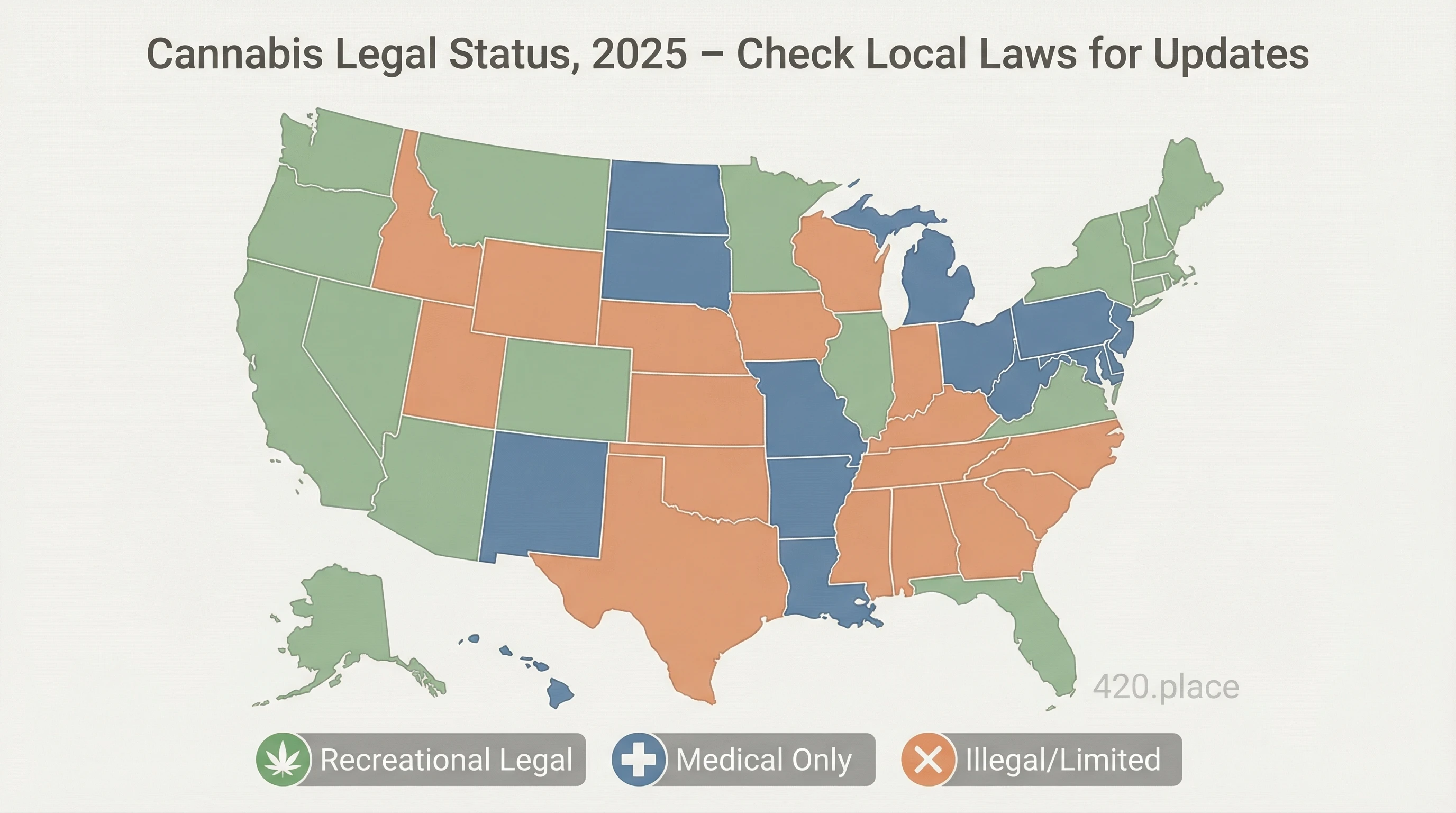
Maine Cannabis Laws: Adult Use, Medical Access, and Travel
Educational boundary: this article is not legal advice, medical advice, or a substitute for a licensed professional. Cannabis laws and health guidance can change. Check official sources before acting.
Why this topic matters
People search for "Maine cannabis laws" when they need a practical answer, not a broad cannabis overview. The safer answer starts with verified sources, then separates health, legal, travel, and workplace questions.
State-law searches are durable, localized, and refresh-sensitive because rules change and travelers need fast verification.
This draft is built from the 420.place USA/Canada research backlog. It connects the topic to Maine Office of Cannabis Policy, DEA Diversion: Controlled Substance Schedules, TSA: Medical Marijuana and keeps the answer in a cautious, source-first lane.
At a glance
| Question | Safer first step |
|---|---|
| Is this allowed where I live or travel? | Check the official state, province, federal, or regulator page before relying on any summary. |
| Is this a health decision? | Review medicines, heart symptoms, fall risk, and mental-health history with a clinician or pharmacist. |
| Is this about driving or work? | Treat impairment and testing as separate issues. A legal purchase does not equal permission to drive or work impaired. |
| Is this about a product? | Read THC, CBD, serving size, batch, warning, and source information before use. |
What to verify before acting
- Use the official United States and regional pages before relying on a summary.
- Separate purchase rules, possession rules, driving rules, and workplace rules.
- Do not assume a medical authorization travels across state, provincial, national, or border lines.
Common mistakes
- Using another region's rules as a shortcut.
- Carrying a product across a border or airport checkpoint without checking the destination rule.
- Treating a legal product label as permission to drive, work, or travel while impaired.
What adults 50+ should check
Older adults often have extra context that a basic cannabis article misses. Before using this topic to make a decision, check:
- prescription medicines, especially sedatives, heart medicines, blood thinners, seizure medicines, and sleep medicines;
- fall risk, dizziness, memory changes, confusion, or balance problems;
- heart symptoms such as chest pressure, palpitations, shortness of breath, or fainting;
- driving, caregiving, safety-sensitive work, or travel plans within the next day;
- whether children, grandchildren, pets, or visitors can reach the product at home.
If any of those checks raise concern, the practical next step is not a bigger dose or a faster purchase. It is a pause, a source check, and a professional conversation.
How to read the official sources
For the United States, cannabis questions often split into several different authorities:
- health effects and medication risks usually come from public-health or clinical sources;
- medical access can depend on a state, province, federal program, clinician, or registry;
- travel and border questions depend on transportation and border authorities;
- workplace questions can depend on employer policy, safety law, and disability or human-rights rules.
Read the page title, date, and scope before applying the rule. A medical cannabis page may not answer adult-use purchase rules. A product-label page may not answer border travel. A driving page may not answer workplace testing.
Source-backed checklist
Use this checklist before making a decision:
- Open the official source for your region or health topic. 2. Confirm the date, program name, and product category. 3. Save the page or note the source if you are planning a renewal, appointment, trip, or purchase. 4. Ask a clinician, pharmacist, legal professional, or employer policy owner when the question affects treatment, driving, work, or border travel.
Red flags that should stop the plan
Stop and seek qualified help when the situation involves:
- chest pain, fainting, severe confusion, hallucination-like symptoms, or repeated vomiting;
- suspected child or pet exposure;
- mixing cannabis with alcohol, sedatives, or unfamiliar prescription medicines;
- a safety-sensitive shift, commercial driving, border crossing, flight, or court/probation requirement;
- pressure from a seller or friend to ignore official source language.
What this article should not do
This page should not promise that cannabis is safe, legal, or appropriate for every reader. It should not recommend a dose for a medical condition. It should not tell a reader they can drive, pass a test, or cross a border. The job is to make the next verification step obvious.
Key source anchors
- Maine Office of Cannabis Policy - Official state cannabis or medical cannabis program reference.
- DEA Diversion: Controlled Substance Schedules - Federal controlled-substance schedule reference.
- TSA: Medical Marijuana - TSA traveler guidance for marijuana and cannabis-infused products.
Related reading
Quick FAQ
Is this legal or medical advice?
No. It is educational planning content. Use official sources and qualified professionals for personal decisions.
Why does the answer depend on location?
Cannabis rules can change by state, province, country, product type, and purpose. Medical access, retail purchase, driving, work, and travel are separate questions.
What should older adults check first?
Check medicines, fall risk, heart symptoms, driving needs, and household storage. Adults over 50 are more likely to have medication or safety factors that change the risk picture.