Red Eyes After Cannabis
Red, irritated, or dry eyes are reported by some people after THC exposure, but redness has many possible causes. Do not assume cannabis is the explanation when pain, injury, infection, a medication reaction, or an eye condition may be involved.
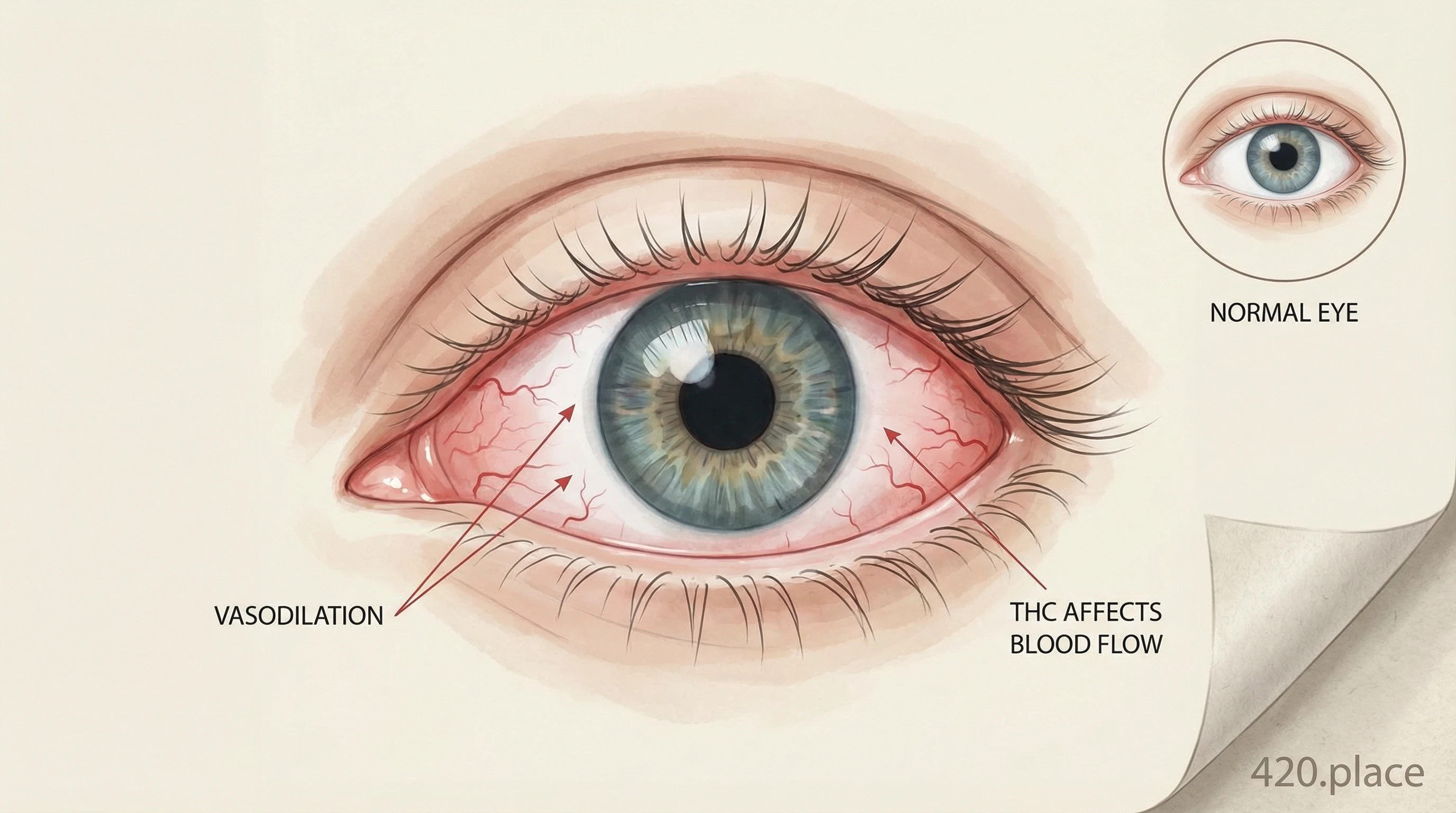
Health Canada lists red, irritated or dry eyes among possible THC side effects, while noting that reactions can vary. A 2024 peer-reviewed ocular review also describes red and dry eyes among reported cannabis or cannabinoid effects. The review does not establish cannabis as an eye treatment, and it says evidence is insufficient to support cannabis for glaucoma.
This page provides general education, not a diagnosis or a personal treatment plan.
First, check for warning signs
Seek prompt eye-care assessment when redness occurs with eye pain, strong light sensitivity, new floaters, or blurred or changed vision. The National Eye Institute lists those symptoms among possible signs of uveitis, an inflammatory eye condition that can threaten vision without treatment.
Urgent assessment is also sensible after an eye injury or chemical exposure, when something may be stuck in the eye, or when symptoms are severe or rapidly worsening. If you wear contact lenses and develop a painful red eye or vision change, remove the lenses and contact an eye professional promptly.
Do not rely on the appearance alone
The visible redness of an eye does not tell you the cause. Dry air, allergies, infection, irritation, contact-lens problems, inflammation, injury, and other conditions can look similar. A cannabis exposure may occur at the same time without being the only cause.
Avoid claims that every cannabis-related red eye is harmless or follows a fixed timeline. The route of exposure, product, dose, other substances, individual response, and unrelated eye conditions can all change what happens. Evidence does not support promising that redness will peak or disappear at an exact number of minutes or hours.
If considering an over-the-counter redness product
Products differ, so follow the Drug Facts label for the exact product and ask a pharmacist or eye professional when unsure. Do not use a brand name as a substitute for reading its active ingredient and warnings.
An official DailyMed label for one tetrahydrozoline product says it is intended for temporary relief of minor redness and discomfort due to minor irritations. The same label warns that overuse may produce increased redness, instructs users to remove contact lenses before use, and says to stop and ask a doctor if eye pain, vision changes, continued redness, irritation, or worsening occurs. Those instructions belong to that label; they are not a universal dose for every eye product or every person.
Do not put unapproved household liquids or cannabis products in the eye. Do not share eye-drop containers, and avoid touching a dropper tip to the eye or another surface.
What about glaucoma?
Cannabis should not be presented as an established glaucoma treatment. The peer-reviewed ocular review found the available evidence insufficient, and intoxication and cardiovascular effects create additional concerns. A person with glaucoma or elevated eye pressure should follow an eye specialist's plan rather than replacing prescribed therapy with cannabis.
What to record before asking for help
If symptoms are not urgent, a short record can make a pharmacist or clinician conversation more useful:
- when the redness began and whether one or both eyes are affected;
- whether there is pain, light sensitivity, discharge, itching, floaters, or a vision change;
- whether contact lenses were worn;
- the cannabis product, route, and approximate time of exposure;
- any alcohol, prescription medicine, nonprescription drug, or other substance used at the same time;
- any eye condition, recent procedure, injury, or chemical exposure.
This information helps a professional assess possibilities. It does not diagnose the cause on its own.
A cautious decision path
- Check for pain, light sensitivity, floaters, injury, or a vision change.
- If any warning sign is present, seek prompt professional assessment.
- If symptoms are mild, stop further eye irritation, avoid rubbing, and remove contact lenses if the product label or an eye professional directs it.
- If using an OTC product, follow only its own current label and stop if redness worsens.
- If redness persists, recurs, or concerns you, contact an eye-care professional rather than assuming cannabis is the cause.
For broader safety context, see Responsible Use and How We Fact-Check.