420.place
18px

Meet the 420.place Medical Advisory Board

Meet the clinicians who review 420.place articles and keep our guidance accurate. See their specialties and how they shape updates.

Logos representing CDC, FDA, NIH used as trust badges.
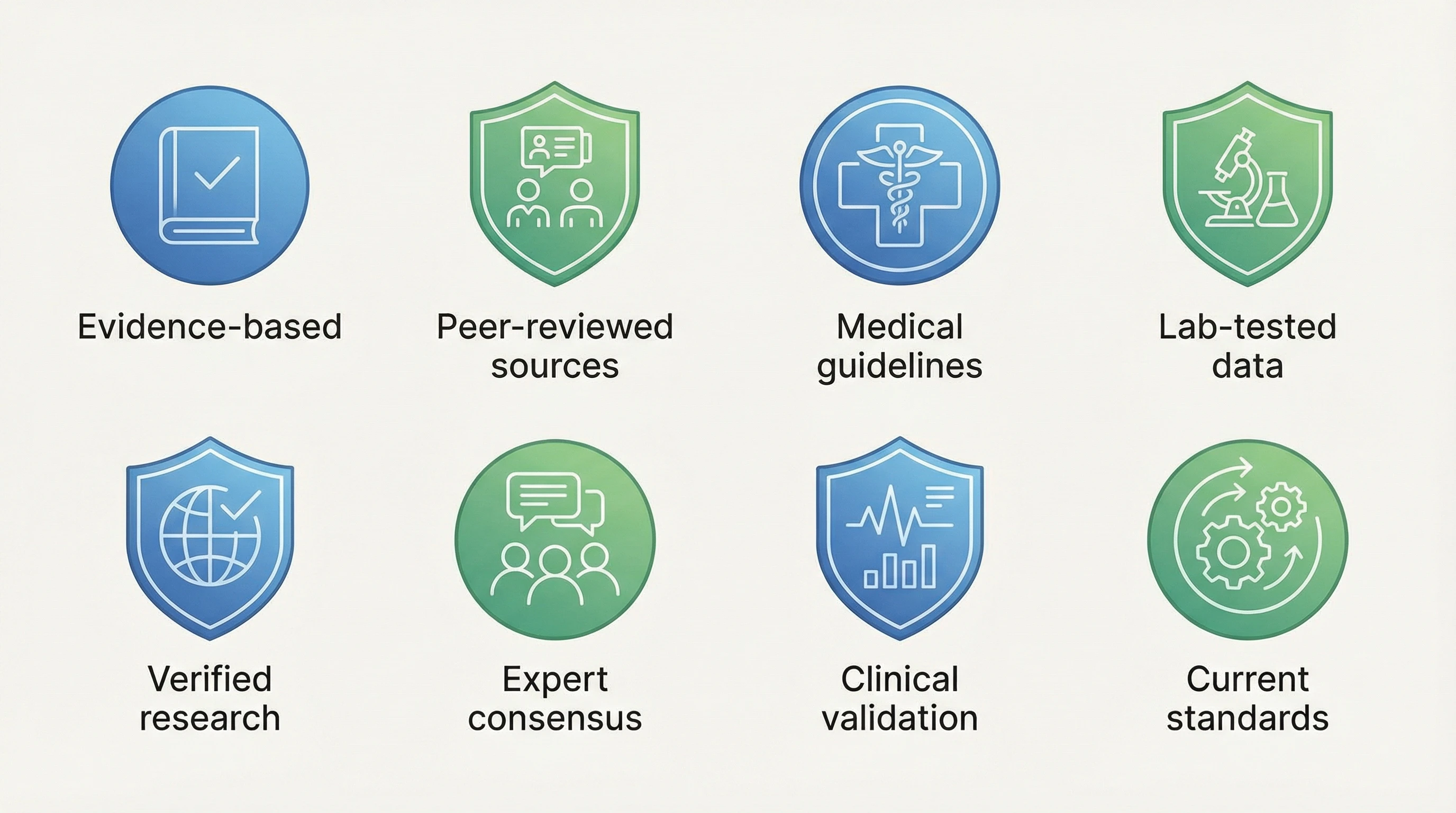
Medical reviewers keep guidance aligned with trusted sources.

Medical Advisory and Editorial Standards at 420 Place

NOTE: This is a template framework. Client should customize with actual board member details or describe their specific medical review process.


Quick Summary

At 420 Place, we take medical accuracy seriously. Every health-related article undergoes rigorous fact-checking using peer-reviewed research, government health sources, and established medical institutions. Our editorial standards prioritize evidence-based information, transparent sourcing, regular updates, and clear correction policies. Whether you're researching medical cannabis, wellness applications, or health conditions, you can trust that our content meets the highest journalistic and medical integrity standards.


Our Commitment to Medical Accuracy

Cannabis information online varies wildly in quality. Some sources make exaggerated claims. Others rely on outdated information. Many lack proper citations.

We believe you deserve better.

Every health-related article on 420 Place follows strict editorial standards designed to provide accurate, balanced, evidence-based information. We don't make claims we can't support. We cite our sources. We update regularly. We correct errors promptly.

Our Review Process

Medical and health content requires special care. Here's how we ensure accuracy:

Research Phase

Before writing begins, our team conducts thorough research:

Source Identification: We identify the most authoritative, current sources on each topic. This means peer-reviewed journals, government health agencies, established medical institutions, and recognized experts.

Evidence Evaluation: We assess the quality of evidence. A single small study receives less weight than multiple large studies or systematic reviews. We distinguish between preliminary findings and established knowledge.

Multiple Perspectives: We consult diverse sources to avoid bias. If experts disagree, we present the range of informed opinions rather than choosing sides arbitrarily.

Currency Check: Medical knowledge evolves. We prioritize recent research while acknowledging important historical studies.

Writing Standards

Our writers follow clear guidelines:

Accuracy Over Sensationalism: We report what evidence actually shows, not what makes the best headline. If research is preliminary, we say so. If results are mixed, we explain that.

Appropriate Hedging: Medical research rarely proves things absolutely. We use precise language: "research suggests," "studies indicate," "evidence shows," rather than overstating certainty.

Avoiding Medical Advice: We provide information, not medical advice. Articles explain conditions, treatments, and research without telling readers what they should do medically. We encourage consultation with healthcare providers.

Accessible Language: We explain complex medical concepts in plain language without oversimplifying or losing accuracy.

Clear Attribution: Claims are attributed to specific sources. Readers can see where information comes from.

Fact-Checking Process

Before publication, content undergoes systematic fact-checking:

Source Verification: Every factual claim is traced back to its source. Links are checked. Citations are verified.

Numerical Accuracy: Statistics, dosages, percentages, and other numbers are double-checked against original sources.

Medical Terminology: Medical terms and concepts are verified for correct usage.

Currency: Publication dates of sources are checked to ensure information is current.

Completeness: We verify that articles present balanced views, not cherry-picked information supporting predetermined conclusions.

Review and Approval

[Client to customize this section based on actual review structure:

  • If formal medical advisory board exists, describe board composition, qualifications, and review process
  • If using external medical reviewers on contract basis, explain that arrangement
  • If using internal review by qualified staff, describe their credentials and process
  • If partnering with medical institutions, explain that relationship]

Template language: Qualified medical professionals review health-related content before publication. This review ensures:

  • Medical accuracy
  • Appropriate context and nuance
  • Balanced presentation of evidence
  • Responsible discussion of treatments and conditions
  • Clear distinction between established knowledge and preliminary research

Editorial Independence

Medical information must be independent from commercial interests. Our editorial standards protect this independence:

No Undisclosed Conflicts

We disclose any potential conflicts of interest. If content relates to products, services, or organizations with which we have financial relationships, we state that clearly.

Evidence-Based, Not Marketing-Based

Articles follow evidence, not marketing interests. We don't exaggerate benefits or minimize risks to serve business interests.

Correction Independence

Commercial considerations don't delay or prevent corrections. If we make an error, we fix it, regardless of business implications.

Advertising Separation

Editorial content remains separate from advertising. Advertisers don't influence editorial decisions, and advertising doesn't appear in ways that could confuse readers about what is editorial content versus advertising.

Source Standards and Hierarchy

Not all sources are equal. We prioritize sources based on reliability and authority:

Tier 1: Highest Priority

Peer-Reviewed Research: Studies published in reputable medical and scientific journals undergo expert review before publication. We prioritize:

  • Systematic reviews and meta-analyses (combining multiple studies)
  • Randomized controlled trials (gold standard for treatment research)
  • Large observational studies
  • Research from recognized institutions

Government Health Agencies: Organizations like NIH, FDA, CDC, and their international equivalents provide authoritative information based on expert consensus.

Major Medical Institutions: Established institutions (Mayo Clinic, Johns Hopkins, Cleveland Clinic, etc.) provide evidence-based information reviewed by medical experts.

Tier 2: Secondary Sources

Medical Organizations: Professional organizations (American Medical Association, specialty medical societies) provide expert consensus, though sometimes with particular perspectives.

University Medical Centers: Research and clinical information from academic medical centers.

Established Health Information Organizations: Organizations dedicated to health education with rigorous editorial standards.

Tier 3: Supporting Context

News Coverage of Research: Journalism covering medical research can provide context but must be verified against original sources.

Expert Interviews: Quotes from qualified experts provide perspective but are verified and contextualized.

Historical Sources: For historical information, we use established historical texts and archaeological reports.

Sources We Avoid or Use Cautiously

Manufacturer Claims: Product manufacturer information may be biased. We verify claims against independent sources.

Advocacy Organizations: Organizations with particular positions may present selective information. We verify against neutral sources.

Social Media and Forums: While sometimes useful for understanding patient experiences, these aren't reliable for medical facts.

Outdated Sources: Old sources may reflect superseded knowledge. We prioritize current information.

How We Stay Current

Medical knowledge evolves. Information that was accurate five years ago may be outdated today. We maintain currency through:

Regular Review Cycles

Health articles are reviewed on regular schedules:

  • Critical medical information: Reviewed every 6 months
  • General health topics: Reviewed annually
  • Breaking news updates: Added as significant developments occur

Research Monitoring

We monitor medical research developments relevant to our content areas. When significant new research emerges, we update affected articles.

Reader Feedback

Readers sometimes identify outdated information or errors. We investigate all substantive feedback and update when appropriate.

Expert Consultation

We maintain relationships with medical professionals who can advise on evolving knowledge in relevant specialties.

Correction and Update Policy

Errors happen despite careful processes. How we handle them matters.

Correction Process

When errors are identified:

Investigation: We verify whether an error exists by checking original sources and consulting experts if needed.

Prompt Correction: Confirmed errors are corrected as quickly as possible. We don't wait for convenient timing.

Transparency: Significant corrections are noted at the article's end or beginning, explaining what was corrected and when.

Root Cause Analysis: We examine why the error occurred to prevent similar future errors.

Types of Corrections

Factual Errors: Incorrect statistics, dates, medical information, or other facts are corrected with explanations.

Clarifications: If accurate information was unclear or could be misinterpreted, we clarify language.

Updates: When new research changes understanding, we update content to reflect current knowledge, noting that understanding has evolved.

Reader Notification

For significant corrections affecting article meaning, we:

  • Note the correction prominently
  • Explain what changed
  • Provide date of correction
  • Preserve transparency about the update

Cannabis-Specific Considerations

Cannabis information presents unique challenges requiring special attention:

Rapidly Evolving Research

Cannabis research is accelerating after decades of restriction. New studies emerge frequently. We:

  • Monitor research developments closely
  • Update content when significant findings emerge
  • Distinguish between preliminary and established research
  • Explain when scientific consensus is still forming

Legal Complexity

Cannabis laws vary by jurisdiction and change frequently. We:

  • Clearly specify jurisdictions when discussing legality
  • Update legal information as laws change
  • Distinguish federal from state law
  • Note that legal information may become outdated

Separating Hype from Evidence

Cannabis generates exaggerated claims. We:

  • Require solid evidence for health claims
  • Call out unproven assertions
  • Distinguish cannabis medicine from cannabis marketing
  • Present realistic expectations

Medical vs. Recreational Context

Cannabis exists in both medical and recreational contexts. We:

  • Clarify which context applies to specific information
  • Avoid conflating medical and recreational use
  • Respect that readers may have different relationships with cannabis
  • Provide relevant information for diverse needs

What Medical Review Doesn't Mean

It's important to understand what our medical review process does and doesn't do:

Not Individual Medical Advice

Articles provide general information about conditions, treatments, and research. They don't provide medical advice for individual situations.

Medical decisions require consideration of individual health history, current conditions, medications, and personal circumstances. Only healthcare providers who know your specific situation can provide appropriate medical advice.

Not Endorsement of Treatment

Explaining a treatment or reporting research doesn't constitute endorsement. We present information about various approaches to help you understand options and have informed conversations with healthcare providers.

Not Comprehensive

Articles cover topics at accessible depth but can't include everything known about complex medical subjects. They provide solid foundations and starting points, not complete medical education.

Not Replacement for Professional Care

Health information, however accurate, doesn't replace professional medical care. If you have health concerns, consult qualified healthcare providers.

Accessibility and Understanding

Medical information should be accessible to people without medical training.

Reading Level

We target Grade 6-8 reading level for most content. Medical topics are complex enough without unnecessarily complex language.

Definitions and Context

When medical terminology is necessary, we define it. We provide context so readers understand why information matters.

Visual Aids

Where helpful, we use images, diagrams, or other visual aids to clarify complex concepts.

Organized Information

Articles are structured with:

  • Quick summaries providing key points
  • Clear headings breaking content into manageable sections
  • Bulleted lists for easy scanning
  • Logical flow from basic to more detailed information

Questions About Our Standards

How can I verify information?

Every article includes sources. Click through to original sources to verify information or learn more.

What if I find an error?

Please contact us with specific information about the suspected error. We investigate all reports and correct confirmed errors promptly.

How often is content reviewed?

Review frequency depends on content type. Critical medical information is reviewed at least every 6 months. Legal information is monitored continuously as laws change.

Can I suggest content updates?

Yes. If you're aware of significant research developments or important information missing from articles, please let us know. We appreciate informed reader engagement.

Who writes the articles?

[Client to customize: Describe writer qualifications, backgrounds, and relevant expertise]

Do you have medical professionals on staff?

[Client to customize: Describe actual medical professional involvement, whether through advisory board, consulting arrangements, or staff positions]

Our Ongoing Commitment

Medical accuracy isn't a one-time achievement. It requires ongoing commitment to rigorous standards, continuous learning, and humble recognition that knowledge evolves.

We commit to:

  • Following evidence wherever it leads
  • Correcting errors promptly and transparently
  • Updating content as knowledge advances
  • Prioritizing reader trust over commercial interests
  • Maintaining the highest editorial standards

Cannabis information deserves the same rigor as any medical topic. As cannabis medicine and research advance, we'll advance with it, bringing you accurate, balanced, evidence-based information you can trust.


Keep Learning

Want to understand more about cannabis science and medicine? Check out these related articles:

  • Cannabis Science Progress in 2025 - Discover cutting-edge research and what it means for medical applications
  • How We Evaluate Cannabis Research - Learn how to assess cannabis studies and claims
  • Understanding Cannabis Testing and Quality Standards - Explore how products are tested and what quality means
  • Questions to Ask Your Doctor About Medical Cannabis - Prepare for informed conversations with healthcare providers

Sources and Standards References

Our editorial standards draw on best practices from:

  1. International Committee of Medical Journal Editors (ICMJE): Standards for medical publishing and conflict of interest disclosure
  2. World Association of Medical Editors (WAME): Guidelines for editorial independence and publication ethics
  3. Health On the Net Foundation (HON): Principles for reliable health information online
  4. National Institutes of Health (NIH): Standards for evidence evaluation and medical information communication
  5. American Medical Writers Association (AMWA): Guidelines for clear, accurate health communication
  6. Society of Professional Journalists: Ethical journalism standards for accuracy, transparency, and correction policies

Last Updated: January 2025

Scientific Sources & References

All information in this article is backed by credible scientific sources and research studies.