"Full-spectrum," "broad-spectrum," and "isolate" describe product composition, but labels are not a guarantee of identical chemistry from one product to another. In broad terms, full-spectrum products are marketed as containing multiple cannabis compounds, broad-spectrum products as containing multiple compounds with little or no detectable THC, and isolates as focusing on one purified compound. The exact meaning depends on the product and jurisdiction. Read the certificate of analysis (COA), not just the front label.
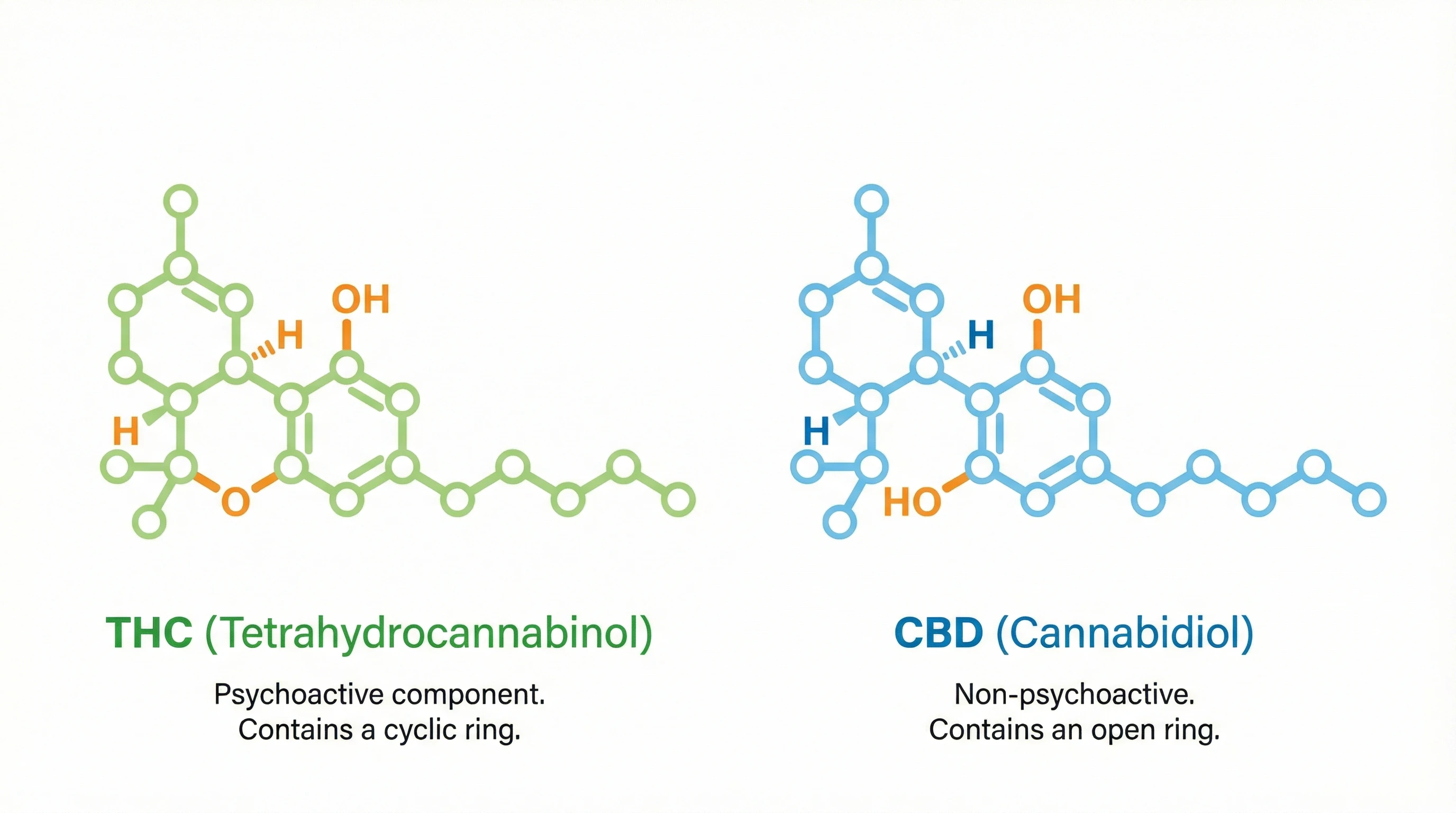
Why the distinction matters
Trace THC can matter for a person avoiding THC, a workplace policy, a drug test, or a jurisdiction with particular rules.
How to compare a label
Check the batch or lot number, test date, serving description, total cannabinoids, and the laboratory identity. Look for a COA that matches the product rather than a generic company certificate. Compare whether "total CBD" and other values are reported in the same units. A product can have a polished label and still provide incomplete information.
What this guide cannot establish
A composition label does not prove that a product will produce a particular effect, replace medical care, or be legal everywhere. The term "entourage effect" is often used in marketing, but the evidence and product chemistry are more complicated than a simple promise that more compounds are better. Individual response, product quality, formulation, and context all matter. This article intentionally gives no consumer dose or treatment recommendation. If you take medicines, are pregnant, have a significant health condition, or must avoid THC, discuss the product and its COA with a qualified clinician or pharmacist and check the current local rules. Compare the batch number on the packaging with the batch number on the COA and note whether the laboratory reports a detection limit. If the seller cannot provide a matching record, treat that as missing information rather than proof of quality.
Make the comparison reproducible
Photograph the package, record its lot number, and save the matching COA before comparing spectrum labels. Note the laboratory, test date, reported units, detection limits, and whether THC was tested rather than merely omitted from marketing copy. The Responsible Use guide explains why labeling does not replace impairment, medication, or storage precautions. If avoiding THC matters for work, travel, health, or testing, obtain advice suited to that context; "broad-spectrum" alone is not sufficient proof. This page compares terminology and evidence limits, not treatment effects. When records disagree, flag the batch for operator review and retain both versions instead of selecting the more favorable result.