Cannabis Terpenes: What Aroma Can--and Cannot--Tell You
What terpenes are
Terpenes and terpenoids occur in many plants, not only cannabis. A peer-reviewed review indexed by PubMed describes terpene-core compounds across selected edible and aromatic plants. In cannabis discussions, terpene names are commonly used as vocabulary for aroma and chemical composition.
Myrcene is one named example. The federal PubChem compound record for myrcene identifies it as a specific chemical compound rather than a consumer outcome. A compound name can describe what was reported or measured; it does not say how a finished product will affect a particular person.
Reading terpene information cautiously
First identify what the product actually provides. A list of terpene names is different from a quantified profile. If amounts or percentages appear, check the units, batch or lot identifier, test date, and whether the result refers to the whole product or another reporting basis.
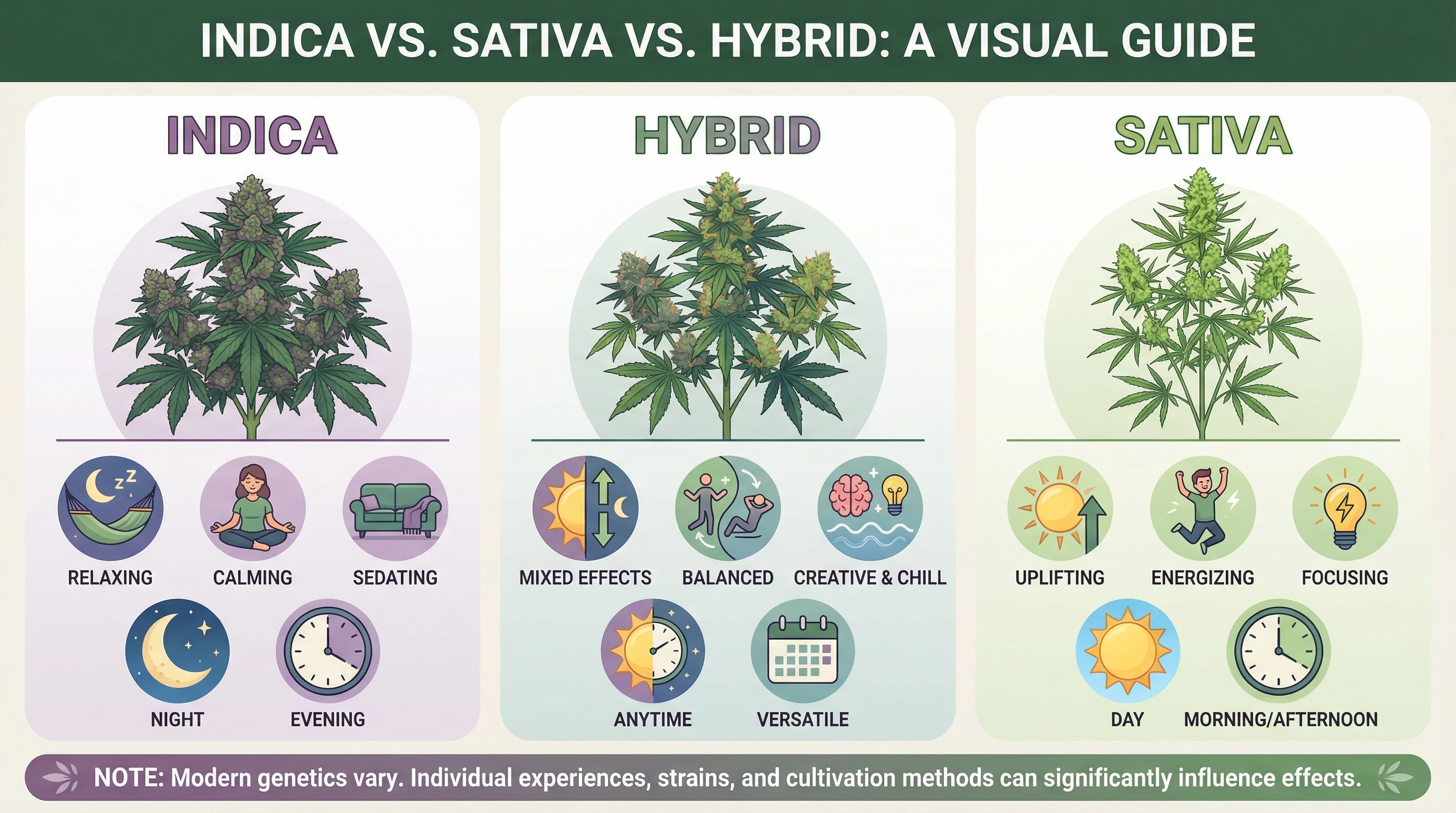
Then separate description from prediction. Aroma words can help communicate a sensory profile, but labels and seller copy may also use words such as "calming," "energizing," or "therapeutic." Those words should not be treated as established outcomes unless the cited evidence studied the same compound, formulation, amount, route, population, and outcome.
Do not infer a personal amount to use from a terpene percentage. Do not assume that two products with the same named terpene are otherwise equivalent. Their cannabinoid content, formulation, batch, storage, and testing context may differ.
What the research can establish
A 2025 narrative review of cannabis terpenes summarizes preclinical and emerging clinical research. Its abstract also says clinical translation is limited by methodological variability, lack of standardized formulations, and insufficient pharmacokinetic characterization, and that more human studies are needed.
That limitation matters when reading product claims. A laboratory or preclinical observation does not automatically establish a dependable effect from a retail product. A review of several compounds does not validate every statement made about one label. The careful conclusion is that terpenes are an active research area, while product-specific and person-specific predictions require evidence that often is not available.
A practical evidence checklist
When comparing terpene information, record:
- the exact product and batch or lot;
- the terpene names and reported units;
- the test date and laboratory or certificate link, if supplied;
- whether the source studied an isolated compound or a finished product;
- whether the evidence involved people, animals, cells, or chemical analysis; and
- whether the claim describes aroma, composition, or a health outcome.
Compare like with like. Missing information is a reason to ask for documentation, not proof that a product is better or worse. Prefer wording such as "the label reports" over "this terpene will make you feel."
Bottom line
Terpene names can be useful for discussing plant chemistry and aroma. They are not a shortcut to a medical conclusion or guaranteed experience. Read the exact label, follow the cited evidence, and keep the conclusion proportional to what the source actually studied.
For more about evidence boundaries, see How We Fact-Check and Responsible Use.
FAQs
Are terpenes unique to cannabis?
No. Peer-reviewed literature describes terpene compounds across many edible and aromatic plants.
Does a terpene label predict how a product will feel?
No. A label can report composition or describe aroma, but it does not guarantee a personal experience or health outcome.
What should I check first on a terpene label?
Start with the exact product and batch, units, test date, laboratory or certificate link, and what type of evidence supports any attached claim.