Cannabis Storage and Safety Guide for Your Home (50+)
Quick Summary: Store cannabis at 60-70 degreesF with 55-62% humidity in airtight glass jars away from light. Properly stored cannabis lasts 6-12 months (up to 2 years). Use childproof containers and keep products locked away from children and pets. Humidity packs help maintain freshness.
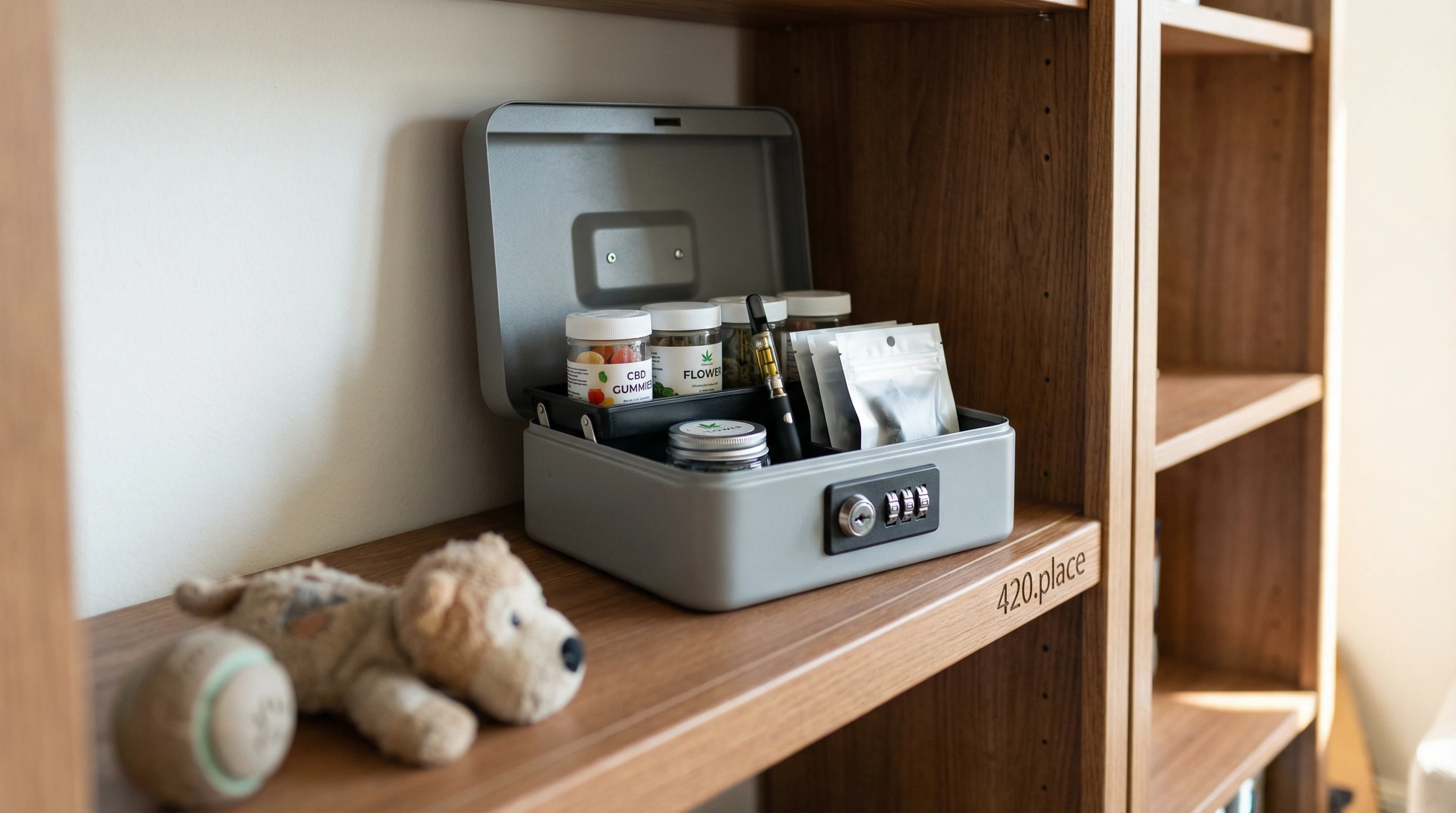
Proper cannabis storage protects your investment and keeps your household safe.
Why Proper Storage Matters
Cannabis loses potency over time when exposed to air, light, heat, and humidity. THC breaks down into CBN, a less potent cannabinoid that can make you feel drowsy. Terpenes, the compounds that give cannabis its aroma and enhance effects, evaporate quickly without proper storage.
Poor storage also creates safety risks. Children and pets can accidentally consume cannabis products. Strong odors can bother family members or neighbors. Mold can grow in humid conditions, making your cannabis unsafe to use.
Good storage habits preserve quality and prevent accidents.
Ideal Storage Conditions
Temperature Control
Keep cannabis between 60-70 degreesF (15-21 degreesC). This temperature range prevents mold growth while preserving cannabinoids and terpenes.
Temperatures above 77 degreesF accelerate THC breakdown. Heat also dries out cannabis, making it harsh to smoke or vaporize. Temperatures below 60 degreesF won't harm cannabis but may slow the curing process if your product is fresh.
Store cannabis away from:
- Direct sunlight and windows
- Heating vents and radiators
- Appliances that generate heat (ovens, refrigerators)
- Attics and garages with temperature fluctuations
A cool, dark closet or drawer works well for most homes.
Humidity Levels
Maintain 55-62% relative humidity (RH) for optimal storage. This range keeps cannabis from drying out or becoming too moist.
Below 55% RH: Cannabis becomes brittle and harsh. Trichomes (resin glands containing cannabinoids) break off easily, reducing potency.
Above 65% RH: Mold and mildew can grow, especially in dense flower buds. Mold appears as white or gray fuzzy spots and produces a musty smell. Never use moldy cannabis.
Use a small hygrometer ($10-20) to monitor humidity inside your storage containers. Many cannabis storage jars come with built-in hygrometers.
Light Protection
Light, especially UV rays, degrades cannabinoids faster than any other factor. A 1976 study published in the Journal of Pharmacy and Pharmacology found that light was the single largest factor in cannabinoid loss.
Store cannabis in opaque or dark-colored containers. If using clear glass, keep containers in a dark place. Avoid transparent plastic bags or containers in visible locations.
Air Exposure
Oxygen causes THC to break down into CBN. While some CBN is fine, too much reduces the energizing or therapeutic effects you're seeking.
Use airtight containers to minimize oxygen exposure. Vacuum-sealed bags work for long-term storage but aren't practical for daily use. Burp (open) your containers every few weeks to release built-up moisture and replace stale air.
Best Storage Containers
Glass Jars (Recommended)
Glass is the gold standard for cannabis storage. Mason jars and specialty cannabis jars work equally well.
Benefits:
- No chemical interaction with cannabis
- Excellent airtight seal
- Reusable and eco-friendly
- Easy to clean
- Available in various sizes
Best practices:
- Choose dark amber or UV-protective glass
- Select jar size based on your cannabis amount (leave minimal air space)
- Add humidity packs to maintain moisture
- Label jars with strain name and date
Popular options include Ball mason jars ($8-15 for a 4-pack) and specialty jars from brands like Planetary Design ($25-40).
Humidity Control Packs
Boveda and Integra Boost packs regulate humidity automatically. These two-way humidity control packs add or remove moisture as needed.
How to use:
- Choose 62% RH packs for cannabis storage (55% for long-term storage)
- Use one 4-gram pack per 1/8 ounce of cannabis
- Replace packs every 2-4 months or when they become stiff
- Don't open the packs; they work through the packaging
Cost: $5-15 for a multi-pack. Worth every penny for maintaining quality.
Childproof Containers
If children visit your home or live with you, childproof containers are essential. Many states legally require cannabis products to be stored in child-resistant packaging.
Look for containers certified as child-resistant by the Consumer Product Safety Commission (CPSC). These containers require a combination of steps that young children can't easily perform.
Options include:
- Locking storage boxes ($30-80)
- Child-resistant jars with push-and-turn lids ($10-25)
- Lockable bags with combination locks ($15-30)
- Safes or lockboxes ($40-200)
Green Rush Packaging and other companies make certified child-resistant containers specifically for cannabis.
What to Avoid
Plastic bags: Static clings to trichomes and pulls them off cannabis. Plastic isn't fully airtight and can impart flavors.
Plastic containers: Most plastic is porous and doesn't seal out oxygen. Plastic can also contain chemicals that leach into cannabis over time.
Metal containers: While airtight, metal can impart metallic flavors. Only use metal containers with a non-reactive interior lining.
Refrigerators/freezers: Temperature and humidity fluctuations promote mold growth. Freezing makes trichomes brittle and easily broken.
How Long Cannabis Lasts
Properly stored cannabis remains potent and safe for 6-12 months. With optimal conditions (62% RH, 60-70 degreesF, no light), cannabis can last up to 2 years.
Quality timeline:
- 0-6 months: Peak freshness, full potency
- 6-12 months: Slight potency loss (5-10%), still high quality
- 1-2 years: Noticeable potency loss (15-25%), acceptable quality
- 2+ years: Significant degradation (30-50%+ loss), harsh taste
Signs your cannabis has expired:
- Crumbles to dust when touched (too dry)
- Musty or ammonia smell (mold or bacterial growth)
- White, gray, or black spots (mold)
- Unusual colors (yellow or brown tint indicates oxidation)
- No aroma (terpenes have evaporated)
When in doubt, throw it out. The cost of replacement is less than the risk of using degraded or contaminated cannabis.
Home Safety Considerations
Protecting Children
Cannabis edibles look like regular candy, cookies, or gummies. Children can't distinguish them from regular treats. Accidental ingestion is one of the fastest-growing reasons for emergency room visits in states with legal cannabis.
Safety measures:
- Store all cannabis products in locked containers
- Keep products in original packaging with warning labels
- Store cannabis separately from regular food
- Educate older children about cannabis safety
- Have the Poison Control number saved: 1-800-222-1222
If a child accidentally consumes cannabis, call Poison Control immediately. Symptoms include drowsiness, confusion, loss of balance, and rapid heart rate. Most cases resolve without lasting effects, but medical supervision is important.
Protecting Pets
Dogs and cats are also susceptible to cannabis toxicity. THC affects pets more severely than humans. Even small amounts can cause serious symptoms.
Pet safety:
- Store cannabis out of reach (remember, cats can jump high)
- Never leave cannabis on tables or counters
- Dispose of cannabis ash and stems in sealed trash
- Clean up dropped flower or crumbs immediately
Signs of cannabis toxicity in pets:
- Lethargy or hyperactivity
- Dilated pupils
- Loss of balance
- Drooling or vomiting
- Urinary incontinence
Contact your veterinarian immediately if your pet ingests cannabis. Be honest about what happened; vets are there to help, not judge.
Fire Safety
If you consume cannabis by smoking, practice fire safety:
- Use sturdy ashtrays that won't tip over
- Ensure smoking materials are fully extinguished
- Never smoke in bed or when drowsy
- Keep lighters and matches in secure locations
- Have working smoke detectors on every floor
Odor Control
Cannabis has a distinctive aroma that not everyone appreciates. While you have the right to use legal cannabis in your home, being considerate of others maintains good relationships.
Storage odor control:
- Use airtight containers (prevents 90% of smell)
- Store containers in closed cabinets or drawers
- Add activated charcoal bags near storage area
- Use odor-absorbing gels (available at cannabis retailers)
Consumption odor control:
- Vaporize instead of smoking (75% less odor)
- Use a sploof or air filter device
- Open windows and use fans
- Consume near an open window or outside
- Use air purifiers with HEPA filters
If you live in an apartment or condo, check your lease agreement. Some properties prohibit smoking (including cannabis) even where it's legal.
Storage Checklist
Use this checklist to evaluate your current storage setup:
Container requirements:
- Airtight seal
- Opaque or dark-colored
- Glass material
- Right size (minimal air space)
- Child-resistant (if needed)
- Clean and dry
Environmental conditions:
- Temperature 60-70 degreesF
- Humidity 55-62% RH
- Dark location (no direct light)
- Away from heat sources
- Stable environment (no fluctuations)
Safety measures:
- Locked or out of reach from children
- Secure from pets
- Products in original packaging (with labels)
- Separate from food items
- Poison Control number accessible
Organization:
- Strains labeled with names
- Purchase dates marked
- Different products separated
- Hygrometer for monitoring
- Humidity packs added
Troubleshooting Common Issues
Problem: Cannabis is too dry
Symptoms: Crumbles easily, harsh smoke, little aroma
Solutions:
- Add 62% humidity pack and wait 24-48 hours
- Place a small piece of lettuce or orange peel in jar for 2-3 hours (check frequently to avoid over-moistening)
- Transfer to smaller jar with less air space
- Use within a few weeks before it dries out more
Problem: Cannabis is too moist
Symptoms: Feels spongy, doesn't break apart easily, hay smell
Solutions:
- Remove from container and spread on clean surface for 30-60 minutes
- Burp containers more frequently (daily)
- Check for mold before using
- Add 55% RH pack instead of 62%
- Ensure storage area has good air circulation
Problem: Loss of smell
Symptoms: Little to no aroma when opening container
Solutions:
- Humidity packs can revive some terpenes if cannabis isn't too old
- Lower storage temperature slightly
- Ensure airtight seal on containers
- Use cannabis soon; terpene loss is often irreversible
Problem: Harsh or unpleasant taste
Symptoms: Scratchy throat, chemical or stale flavor
Solutions:
- Check for mold or contamination
- Verify cannabis hasn't exceeded 12-month storage period
- Ensure containers are clean (residue from previous strains can affect taste)
- Try lower temperature when vaporizing (higher temps can enhance harshness)
Travel and Transport
When traveling with cannabis, safety and legality are paramount. Never cross state lines with cannabis, even between two legal states. Federal law prohibits interstate cannabis transport.
Within your state:
- Keep cannabis in original packaging with labels
- Store in locked containers in trunk (not passenger area)
- Bring only what you'll use
- Know local possession limits
- Don't consume while driving or operate vehicles after use
Air travel: Some airports in legal states allow cannabis in carry-on bags for in-state travel only. Check your specific airport's policy.
Special Considerations for Concentrates and Edibles
Concentrates (wax, shatter, live resin)
Store in small silicone or glass containers at 60-70 degreesF. Concentrates are more sensitive to heat than flower. Avoid freezing, which can cause "sugaring" (texture changes).
Shelf life: 6-12 months with proper storage. Watch for color changes or separation, which indicate degradation.
Edibles
Follow package instructions for storage. Many edibles require refrigeration after opening.
- Baked goods: 5-7 days at room temperature, 1-2 weeks refrigerated
- Gummies: 6-9 months in cool, dark place
- Tinctures: 1-2 years in dark glass bottles
- Beverages: Check expiration dates, usually 6-12 months
Always keep edibles in original packaging with dosage information. Store separately from regular food to prevent accidental consumption.
Keep Learning
Ready to expand your cannabis knowledge? Check out these related guides:
- How to Read Cannabis Lab Labels: Understand COAs and what test results mean
- Cannabis and Medication Interactions: Learn which medications require extra caution
- Beginner's Guide to Cannabis Products: Explore different consumption methods and their effects
- Dry Herb Vaporizer Guide: Discover a smoke-free way to consume cannabis flower
Sources
- Planetary Design - Cannabis storage solutions and humidity control research
- Green Rush Packaging - Child-resistant packaging standards and compliance
- Leafwell - Cannabis storage best practices and shelf life data
- Releaf UK - Temperature and humidity impact on cannabinoid preservation
This article is for informational purposes only. Always follow local laws and consult healthcare providers about cannabis use, especially if you take medications or have health conditions.