How to Read Cannabis Lab Labels and Test Results (2026 Guide)
Quick Summary: Cannabis lab labels (COAs) show cannabinoid percentages, terpene profiles, and safety test results. Look for product info, potency levels (THC/CBD), terpene content, and contaminant testing (pesticides, heavy metals, mold). Access COAs via QR codes or retailer websites. Red flags include missing tests, failed results, or unverifiable labs.
Understanding cannabis lab labels empowers you to make informed choices about the products you use. These certificates of analysis (COAs) provide crucial information about potency, safety, and quality. This guide breaks down lab labels into simple, actionable insights.
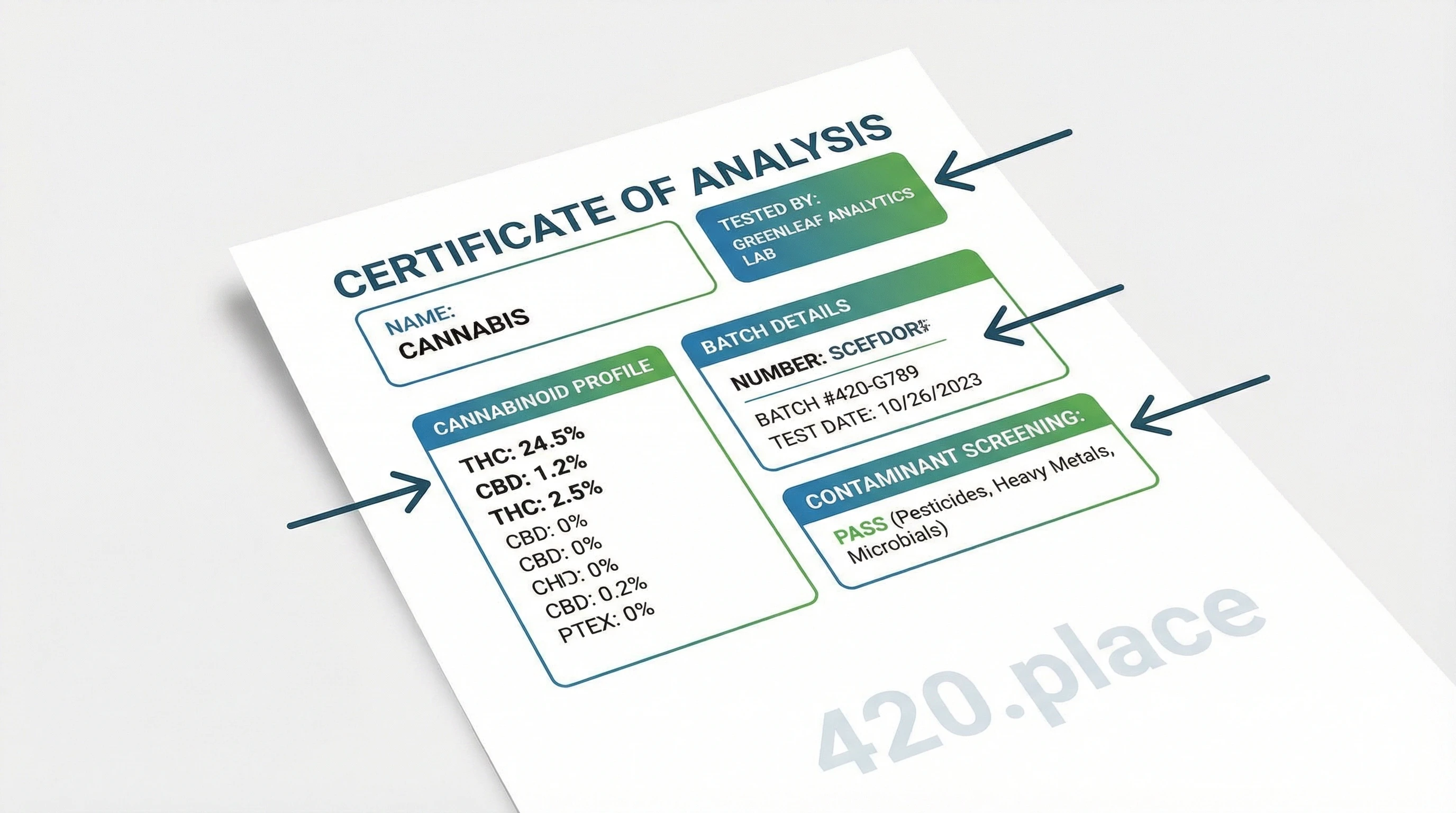
What is a Certificate of Analysis (COA)?
A Certificate of Analysis is a document created by licensed testing laboratories. It verifies what's actually in your cannabis product. Think of it as a nutrition label for cannabis.
COAs test for:
- Cannabinoid content (THC, CBD, and others)
- Terpene profiles (aroma and flavor compounds)
- Contaminants (pesticides, heavy metals, mold, solvents)
- Moisture content and foreign materials
Most legal cannabis states require third-party lab testing. Products cannot be sold without passing specific safety standards. The COA proves a product meets these requirements.
Why Lab Testing Matters
Lab testing protects your health and ensures you get what you pay for. Without testing, you can't know:
- Actual potency: Package labels can be inaccurate. Some products contain far less THC or CBD than advertised.
- Safety: Pesticides, mold, and heavy metals can contaminate cannabis. These pose serious health risks, especially for people with compromised immune systems.
- Consistency: Testing ensures each batch meets the same quality standards.
- Value: You deserve to know if you're paying premium prices for low-potency products.
For medical cannabis users, accurate testing is critical. Dosing depends on knowing exact cannabinoid content.
How to Access COAs
QR Codes
Most cannabis products now include QR codes on packaging. Scan the code with your smartphone camera to access the COA instantly.
QR codes link directly to lab results for that specific batch. Make sure the batch number on your product matches the batch number on the COA.
Retailer Websites
Many dispensaries post lab results on their websites. Look for a "Lab Results" or "Test Results" tab on product pages.
Ask your budtender to show you the COA if you can't find it online. Reputable retailers keep COAs readily available.
Lab Websites
Some testing labs maintain public databases. If you have the batch number, you can search the lab's website directly.
Common testing labs include:
- ACS Laboratory
- SC Labs
- Steep Hill Labs
- MCR Labs
- CannaSafe
State Tracking Systems
Some states use seed-to-sale tracking systems that include lab results. Examples include:
- Metrc: Used in many states for inventory tracking
- BioTrack: Alternative tracking system
- State-specific portals: New York OCM, California Metrc, etc.
These systems may require registration but provide verified, official test results.
Understanding the COA Structure
A standard COA contains several sections. Let's break down each component.
Product Information Section
This header includes:
- Product name and type: Flower, edible, concentrate, etc.
- Batch or lot number: Unique identifier for this production batch
- Test date: When the sample was analyzed
- Sample date: When the sample was collected
- Production date: When the product was made
- Producer/Manufacturer: Company name and license number
- Lab name and license: Testing facility credentials
What to check: Ensure the batch number matches your product. Verify the lab is licensed in your state. Check that test dates are recent (within 3-6 months for flower, up to 12 months for concentrates).
Cannabinoid Profile
This is usually the most prominent section. It lists all cannabinoids detected in the product.
Common cannabinoids:
- THC (Delta-9 THC): Main psychoactive compound
- THCA: Raw form of THC (converts to THC when heated)
- Total THC: THCA x 0.877 + THC (what you'll actually get after heating)
- CBD: Non-intoxicating, therapeutic cannabinoid
- CBDA: Raw form of CBD
- Total CBD: CBDA x 0.877 + CBD
- CBN: Mildly sedating, created when THC degrades
- CBG: Minor cannabinoid, may have therapeutic benefits
- CBC: Minor cannabinoid, anti-inflammatory properties
Percentages explained:
- 20% Total THC means 200mg of THC per gram of product
- A 1-gram pre-roll at 20% THC contains 200mg THC
- A 10mg edible serving contains 10mg of activated THC (already decarboxylated)
What to look for:
- Total THC and Total CBD are the numbers that matter (not THCA/CBDA alone)
- Higher isn't always better; 15-20% THC is plenty for most users
- CBD percentages indicate therapeutic potential without strong psychoactive effects
- Balanced ratios (1:1 THC:CBD or similar) provide moderate effects
Example interpretation:
Total THC: 18.5% Total CBD: 0.8% CBN: 0.3% CBG: 1.2% This is a moderately potent product with minimal CBD. The low CBN indicates fresh cannabis (old cannabis has higher CBN). The CBG level is typical for most strains.
Terpene Analysis
Terpenes are aromatic compounds that give cannabis its smell and flavor. They also influence effects through the "entourage effect" - the interaction between cannabinoids and terpenes.
Common terpenes and their properties:
| Terpene | Aroma | Potential Effects | Typical % Range |
|---|---|---|---|
| Myrcene | Earthy, musky | Relaxing, sedating | 0.2-2.0% |
| Limonene | Citrus, lemon | Uplifting, mood-enhancing | 0.1-1.5% |
| Caryophyllene | Spicy, peppery | Anti-inflammatory, pain relief | 0.1-1.0% |
| Pinene | Pine, fresh | Alertness, memory support | 0.1-0.8% |
| Linalool | Floral, lavender | Calming, anxiety relief | 0.05-0.5% |
| Humulene | Woody, earthy | Appetite suppressant | 0.05-0.5% |
| Terpinolene | Herbal, floral | Uplifting, complex effects | 0.05-0.5% |
What to look for:
- Total terpene content above 1% is considered good
- 2%+ is excellent and indicates fresh, high-quality cannabis
- Dominant terpenes suggest likely effects (relaxing vs. energizing)
- Fresh cannabis has higher terpene levels; old cannabis loses terpenes
Example interpretation:
Total Terpenes: 2.3% Myrcene: 0.9% Limonene: 0.6% Caryophyllene: 0.4% This profile suggests relaxing effects (high myrcene) with some uplifting qualities (limonene). The total terpene content indicates fresh, aromatic product.
Contaminant Testing
This critical section confirms product safety. Different states require different tests, but common panels include:
Pesticide Testing
Tests for agricultural chemicals that may have been used during cultivation. Legal limits are measured in parts per million (ppm) or parts per billion (ppb).
What to look for:
- "Pass" or "ND" (not detected) for all pesticides
- "Fail" means unsafe levels detected - do not use
- Some COAs list specific pesticides tested (often 50-100+ compounds)
Heavy Metals
Tests for toxic metals that can accumulate in cannabis plants from soil or water:
- Lead
- Arsenic
- Cadmium
- Mercury
What to look for:
- All heavy metals should show "Pass" or levels below state limits
- Heavy metal contamination is less common but serious if present
Microbial Contamination
Tests for harmful bacteria and fungi:
- Total yeast and mold count
- E. coli
- Salmonella
- Aspergillus (dangerous mold species)
What to look for:
- "Pass" or "Absent" for all microbial tests
- Especially important for immune-compromised individuals
- Failed microbial tests mean the product is unsafe
Residual Solvents (for concentrates)
Extracts made with butane, propane, or ethanol must be tested for leftover solvents.
What to look for:
- Solvent levels below state limits (usually measured in ppm)
- "Pass" status for all solvents tested
- Common solvents: butane, propane, ethanol, hexane, acetone
Moisture and Foreign Materials
Some states test for:
- Moisture content (too high risks mold growth)
- Foreign materials (stems, seeds, insects)
What to look for:
- Moisture content typically 5-15%
- "Pass" for foreign materials (none detected)
Testing Laboratory Information
The bottom of the COA includes lab credentials:
- Laboratory name and license number
- Lab director signature
- Accreditation information (ISO certification, state approval)
- Contact information
What to verify:
- Lab is licensed in your state
- Lab has proper accreditations
- COA includes signature and date
- Lab contact info is current (search online to confirm)
Red Flags to Watch For
Missing or Incomplete Tests
A complete COA should include:
- Cannabinoid profile
- Terpene analysis
- Pesticide screening
- Heavy metal testing
- Microbial testing
- Moisture content (in most states)
Red flag: COAs showing only cannabinoid content without safety tests. This suggests incomplete or non-compliant testing.
Failed Test Results
Any "Fail" notation means the product did not meet safety standards.
Common failures:
- Pesticide levels above legal limits
- Microbial contamination detected
- Heavy metals above safe thresholds
- Excessive moisture content
What to do: Do not use products with failed tests. Return them to the dispensary if possible. Report serious safety issues to your state's cannabis regulatory agency.
Unverifiable Lab Results
Some unscrupulous operators create fake COAs or use unlicensed labs.
Red flags:
- Can't verify lab license number with state database
- Lab website doesn't exist or looks unprofessional
- Batch numbers don't match product packaging
- QR code doesn't work or links to generic results
What to do: Contact the lab directly to verify results. Search your state's licensed laboratory list. Report suspected fraud to regulators.
Suspiciously High Numbers
While high potency is possible, be skeptical of:
- Total THC above 35% for flower (rare and often inaccurate)
- Total terpenes above 4% (uncommon)
- Perfect round numbers (exactly 25.0% THC suggests manipulation)
Reality check: Most high-quality cannabis flower tests between 15-28% THC. Numbers significantly higher may indicate testing irregularities or selective sampling.
Outdated Test Results
Cannabis degrades over time, so old test results don't reflect current product quality.
Red flags:
- Test date more than 6 months old (flower)
- Test date more than 12 months old (concentrates or edibles)
- No test date listed
What to do: Ask for products with recent test results. Older products may have reduced potency and terpene content.
Generic or Stock COAs
Some sellers use generic lab results for multiple batches instead of batch-specific testing.
Red flags:
- Same COA for multiple different batches
- Batch number missing or doesn't match product
- Test date predates production date
What to do: Insist on seeing batch-specific results. Report this practice to regulators if widespread.
How to Use COA Information
Choosing the Right Product
For desired effects:
- Relaxation: Look for high myrcene (>0.5%) and moderate THC (12-20%)
- Energy/Focus: Seek limonene, pinene, and moderate THC
- Pain relief: Higher THC (18-25%) with caryophyllene
- Anxiety management: CBD:THC ratios of 1:1 or higher CBD
- Sleep: High myrcene, some CBN, moderate-high THC
For safety:
- Always verify "Pass" on all contaminant tests
- Check for recent test dates
- Confirm batch number matches your product
Dosing Accurately
Flower/Pre-rolls:
- 20% THC = 200mg THC per gram
- A 0.5g joint at 20% THC contains 100mg total THC
- You absorb roughly 30-40% when smoking, so ~30-40mg absorbed
Edibles:
- Dosing is labeled directly (5mg, 10mg, etc.)
- COA confirms the labeled dose is accurate
- Start with 2.5-5mg if you're new to edibles
Concentrates:
- 70% THC concentrate = 700mg THC per gram
- A small dab (0.05g) at 70% THC = 35mg THC
- Start very small with concentrates
Comparing Products
Use COAs to compare similar products objectively:
Product A:
- Total THC: 22%
- Total Terpenes: 1.8%
- Price: $45/eighth
Product B:
- Total THC: 18%
- Total Terpenes: 2.5%
- Price: $40/eighth
Product B may offer better value despite lower THC. Higher terpenes often mean better flavor, aroma, and effects.
Tracking Your Preferences
Keep notes on products you enjoy:
- What THC percentage worked well?
- Which terpenes were dominant?
- What effects did you experience?
Over time, you'll identify patterns. You might discover you prefer products with high limonene, or that 15% THC is your sweet spot.
State-Specific Considerations
Testing requirements vary by state. Here's what to expect in major markets:
California
- Requires comprehensive testing including cannabinoids, terpenes, pesticides, heavy metals, microbials, and solvents
- COAs must be from licensed labs
- Results tracked in METRC system
Colorado
- Mandatory testing for potency and contaminants
- Random sample testing from retail shelves
- Results available through state database
New York
- Office of Cannabis Management (OCM) oversees testing
- Comprehensive contaminant testing required
- QR codes link to official state portal
New Jersey
- Cannabis Regulatory Commission sets testing standards
- All products require COA before sale
- Results published on CRC website
Check your state's specific requirements on the cannabis regulatory agency website. Some states have stricter standards than others.
Common Questions About Lab Testing
Why do percentages vary between batches?
Cannabis is an agricultural product. THC and terpene levels vary based on:
- Growing conditions (light, nutrients, temperature)
- Harvest timing
- Curing and storage methods
- Genetic variation within the same strain
Batch-to-batch variation of 2-5% is normal and expected.
Can labs manipulate results?
Unfortunately, yes. Some labs have been caught inflating THC numbers to help producers market products. Regulators are cracking down, but "lab shopping" (using labs known for high results) still occurs.
Stick to reputable labs with good reputations. Search "[lab name] reviews" or check state enforcement actions.
Do higher numbers mean better quality?
Not necessarily. Quality involves:
- Balanced cannabinoid profiles
- Rich terpene content
- Proper curing and freshness
- Absence of contaminants
A 15% THC flower with 2.5% terpenes often outperforms a 28% THC flower with 0.8% terpenes in terms of effects and experience.
Should I avoid all products with detectable pesticides?
Not if they're within legal limits. "ND" (not detected) is ideal, but trace amounts below action limits are considered safe. State limits are set with safety margins.
However, if you're immune-compromised or especially sensitive, prioritize products with "ND" across all pesticide tests.
Annotated COA Example
Here's what a complete COA should look like:
CERTIFICATE OF ANALYSIS
Product: Blue Dream Pre-Roll (1g) Batch #: BD-PR-2025-0123 Sample Date: January 15, 2025 Test Date: January 18, 2025 Producer: Green Valley Farms (License #C11-0000123-LIC)
Laboratory: ACS Laboratory (License #L8-0000456-LIC)
CANNABINOID PROFILE (% by weight)
| Cannabinoid | Result | mg/g |
|---|---|---|
| THCA | 19.8% | 198 |
| Delta-9 THC | 0.8% | 8 |
| Total THC | 18.2% | 182 |
| CBDA | 0.2% | 2 |
| CBD | 0.1% | 1 |
| Total CBD | 0.3% | 3 |
| CBN | 0.2% | 2 |
| CBG | 0.9% | 9 |
Total THC = (THCA x 0.877) + THC
TERPENE PROFILE (% by weight)
| Terpene | Result | mg/g |
|---|---|---|
| Myrcene | 0.82% | 8.2 |
| Pinene | 0.35% | 3.5 |
| Caryophyllene | 0.28% | 2.8 |
| Limonene | 0.24% | 2.4 |
| Linalool | 0.12% | 1.2 |
| Total Terpenes | 1.81% | 18.1 |
SAFETY TESTING
Pesticides: PASS (ND for all compounds tested) Heavy Metals: PASS
- Lead: <LOQ
- Arsenic: <LOQ
- Cadmium: <LOQ
- Mercury: <LOQ
Microbial: PASS
- Total Yeast & Mold: <10,000 CFU/g
- E. coli: Absent
- Salmonella: Absent
Moisture Content: 8.2% (PASS)
Laboratory Director Signature: [Signed] Date Issued: January 18, 2025
Interpretation of this example:
- Moderate potency (18.2% total THC) - good for most users
- Well-preserved terpenes (1.81% total) - fresh product
- Dominant myrcene suggests relaxing effects
- All safety tests passed - safe to use
- Recent test date - current results
- Batch number can be verified with producer
Keep Learning
Deepen your cannabis knowledge with these related guides:
- Cannabis Storage and Safety Guide: Keep your products fresh and secure
- Beginner's Guide to Cannabis Dosing: Find your optimal dose
- Understanding Cannabis Strains: Learn about indica, sativa, and hybrids
- Cannabis and Medication Interactions: Stay safe if you take prescriptions
Sources
- New Jersey Cannabis Regulatory Commission (NJ CRC) - Testing requirements and COA standards
- ACS Laboratory - Cannabis testing methodologies and cannabinoid analysis
- Metrc - Seed-to-sale tracking and lab result integration
- New York Office of Cannabis Management (NY OCM) - State testing regulations and consumer resources
- Cannabis Workforce Initiative - Lab testing education and industry standards
This article is for informational purposes only. Always verify product safety through proper lab testing and consult healthcare providers about cannabis use, especially if you take medications or have health conditions.