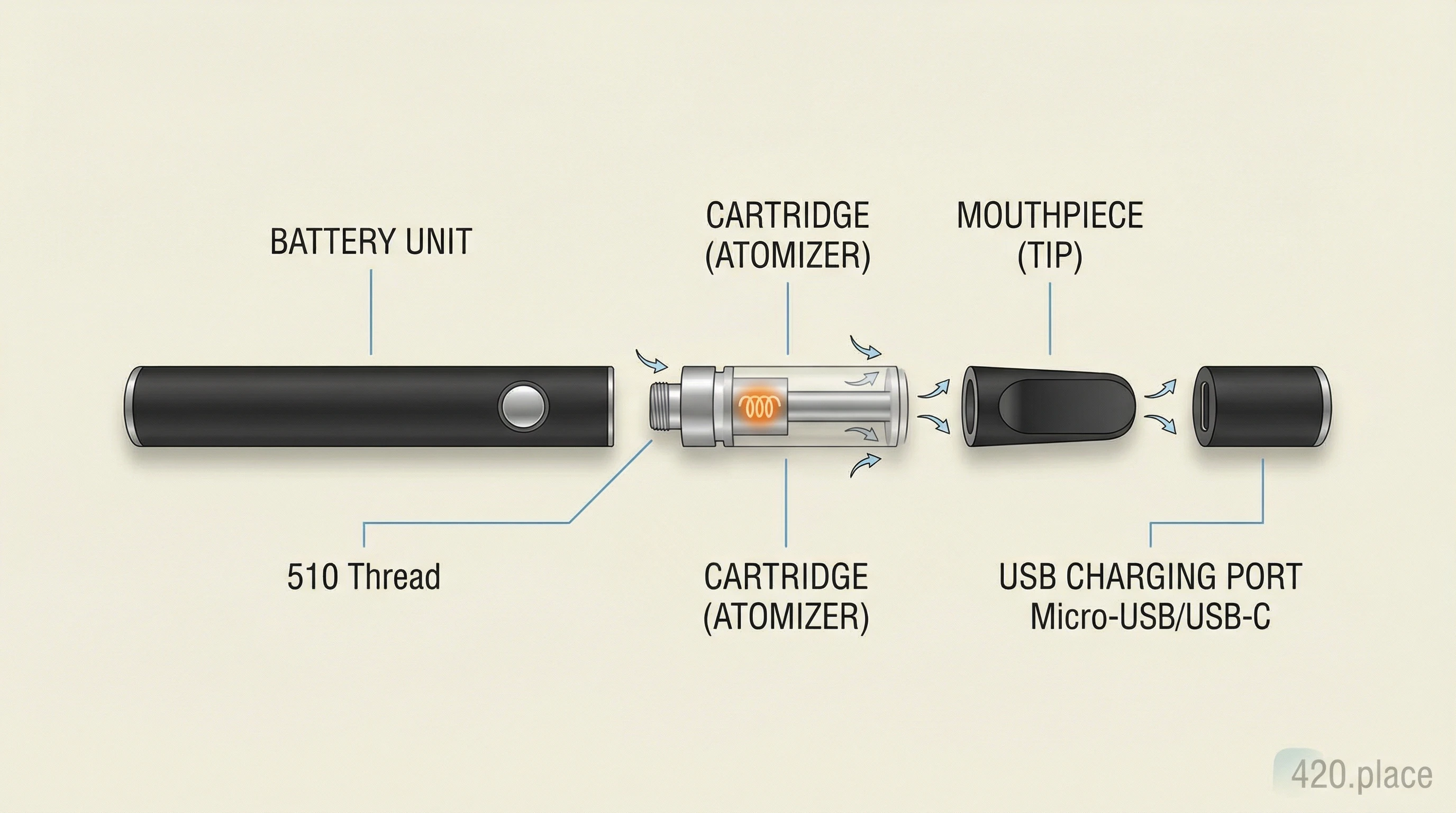
Complete Guide to Dry Herb Vaporizers (2026)
Quick Summary: Dry herb vaporizers heat cannabis to 350-390 degreesF to release cannabinoids and terpenes without combustion. Vaporizing reduces toxins by up to 95% compared to smoking, preserves flavor, and offers temperature control for different effects. Low temps (320-356 degreesF) provide flavor and energy; medium (356-392 degreesF) offers balanced effects; high (392-430 degreesF) delivers sedation. Best for health-conscious users seeking smoke-free cannabis consumption.
Vaporizing cannabis offers a cleaner, more controlled alternative to smoking. For adults 50 and older concerned about respiratory health, vaporizers provide the benefits of cannabis flower without many of smoking's harmful effects. This comprehensive guide covers everything you need to know about dry herb vaporizers.
What is a Dry Herb Vaporizer?
A dry herb vaporizer is a device that heats cannabis flower to specific temperatures that release cannabinoids and terpenes as vapor, without burning the plant material.
Key difference from smoking:
- Smoking: Combustion at 800-1400 degreesF creates smoke, tar, and carcinogens
- Vaporizing: Controlled heating at 320-430 degreesF creates vapor without combustion
The result is a cleaner inhalation experience with fewer harmful byproducts.
Types of Dry Herb Vaporizers
Portable vaporizers:
- Battery-powered, handheld devices
- Use anywhere discreetly
- Examples: Mighty+, XMAX V3 Pro, PAX 3
- Price range: $80-$400
Desktop vaporizers:
- Plug into wall outlet, stay in one place
- More powerful, larger vapor production
- Examples: Volcano, Arizer Extreme Q
- Price range: $150-700
Manual vaporizers:
- Heated with butane torch or lighter
- No battery or electricity needed
- Examples: DynaVap, Sticky Brick
- Price range: $35-200
This guide focuses on portable and manual vaporizers, which are most popular for personal use.
How Vaporizers Work: Conduction vs. Convection
Understanding heating methods helps you choose the right vaporizer.
Conduction Heating
Heat transfers directly from hot surface to cannabis through physical contact.
How it works:
- Cannabis sits in a chamber (oven)
- Heated walls directly touch and heat the cannabis
- Like cooking in a frying pan
Pros:
- Heats up very quickly (30-60 seconds)
- Usually less expensive
- Simple, reliable technology
Cons:
- Can heat unevenly (bottom gets hotter than top)
- Risk of combustion if too hot
- May need to stir cannabis mid-session for even heating
Examples: PAX 3, DynaVap, Utillian 421
Convection Heating
Hot air flows through cannabis, heating it indirectly.
How it works:
- Heater warms air to specific temperature
- Hot air passes through cannabis in chamber
- Like cooking in a convection oven
Pros:
- Very even heating (no hot spots)
- Better flavor (preserves terpenes)
- No risk of combustion
- More efficient extraction
Cons:
- Takes longer to heat up (60-120 seconds)
- More expensive
- Requires stronger battery or power source
Examples: Firefly 2+, Grasshopper, Healthy Rips Rogue
Hybrid Heating
Combines conduction and convection for optimal performance.
How it works:
- Chamber walls provide conduction heat
- Air flow adds convection heat
- Gets benefits of both methods
Pros:
- Fast heat-up with even extraction
- Excellent vapor quality and flavor
- Efficient cannabis use
Cons:
- Usually premium-priced
- More complex engineering
Examples: Mighty+, Crafty+, Arizer Solo 2
Best choice for most users: Hybrid heating offers the best balance of performance, efficiency, and vapor quality.
Health Benefits of Vaporizing vs. Smoking
Vaporizing offers significant health advantages, especially important for adults 50+.
Reduced Toxin Exposure
Research shows vaporizing reduces harmful chemicals by up to 95% compared to smoking.
What you avoid:
- Tar: Sticky residue that damages lungs
- Carbon monoxide: Toxic gas that reduces oxygen in blood
- Carcinogens: Cancer-causing compounds created by combustion
- Benzene: Toxic chemical produced when burning plant matter
- Ammonia: Irritating compound from combustion
Study evidence: A 2007 study in the Journal of Cannabis Therapeutics found that vaporizing at 365-392 degreesF produced cannabinoid vapor with minimal harmful byproducts, while smoking produced significant levels of toxic compounds.
Respiratory Benefits
Immediate benefits:
- Less coughing and throat irritation
- Reduced phlegm production
- No harsh smoke irritating airways
- Easier on sensitive lungs
Long-term benefits:
- Lower risk of chronic bronchitis
- Better lung function preservation
- Reduced respiratory infection risk
- Less damage to cilia (tiny hairs that clean airways)
Research findings: A 2010 study published in Substance Abuse found that cannabis users who switched from smoking to vaporizing reported improved respiratory function within one month.
Important for older adults: Lung capacity naturally decreases with age. Vaporizing minimizes additional respiratory stress.
More Efficient Cannabinoid Extraction
Vaporizing extracts more cannabinoids from your cannabis than smoking.
Why:
- Controlled temperature optimizes cannabinoid release
- Nothing burns away or is destroyed
- You can extract at different temperatures for different compounds
Practical benefit: You use less cannabis to achieve the same effects. A 0.3g vaporizer bowl may equal a 0.5g joint in effects.
Over time, this efficiency saves money and reduces consumption.
Better Flavor and Terpene Preservation
Terpenes provide cannabis's aroma, flavor, and contribute to effects (entourage effect).
Problem with smoking: Temperatures above 400 degreesF destroy most terpenes. Smoke tastes harsh and burnt.
Vaporizing advantage: Low to medium temperatures (340-380 degreesF) preserve delicate terpenes. You taste the strain's true flavor profile.
Experience difference:
- Smoking: Harsh, smoky, burnt taste
- Vaporizing: Flavorful, herbal, strain-specific taste
Many people find vaporizing more enjoyable once they adjust to the different sensation.
Precise Dosing and Control
Vaporizers offer control impossible with smoking.
Temperature control benefits:
- Target specific effects (energizing vs. sedating)
- Find your optimal dosage more easily
- Adjust intensity session by session
- Extract cannabinoids in stages
Better for medical users: Precision helps maintain consistent therapeutic dosing.
Temperature Guide for Different Effects
Different cannabinoids and terpenes vaporize at different temperatures. Adjusting temperature changes your experience.
Temperature Ranges Explained
| Temperature Range | Fahrenheit | Celsius | Effects | Best For |
|---|---|---|---|---|
| Low | 320-356 degreesF | 160-180 degreesC | Energizing, clear-headed, flavorful | Daytime use, productivity, taste |
| Medium | 356-392 degreesF | 180-200 degreesC | Balanced, full effects, good flavor | All-around use, evening relaxation |
| High | 392-430 degreesF | 200-221 degreesC | Sedating, intense, maximum extraction | Sleep, pain relief, maximum potency |
Low Temperature (320-356 degreesF / 160-180 degreesC)
What vaporizes:
- Light terpenes (limonene, pinene, myrcene)
- Some THC
- Minimal CBD
Effects:
- Clear-headed, functional high
- Energizing, uplifting
- Enhanced creativity and focus
- Minimal body effects
Vapor characteristics:
- Light, wispy vapor
- Excellent flavor
- Cool and smooth
- Less visible exhaled vapor
Best for:
- Morning or daytime use
- Productivity and focus
- Social situations
- Flavor enthusiasts
- Cannabis newcomers (gentler effects)
Drawback: Less intense effects; may not provide sufficient pain relief or sedation for medical users.
Medium Temperature (356-392 degreesF / 180-200 degreesC)
What vaporizes:
- Most terpenes
- Most THC
- CBD starts to vaporize (around 356 degreesF)
- Some CBN
Effects:
- Balanced psychoactive and physical effects
- Euphoric and relaxing
- Pain and anxiety relief
- Moderate body sensation
Vapor characteristics:
- Visible, moderately dense vapor
- Good flavor
- Warm but comfortable
- Satisfying exhale
Best for:
- Evening relaxation
- General recreational use
- Moderate pain or anxiety relief
- Most users' sweet spot
This is the most popular temperature range - it provides full effects while maintaining good flavor.
High Temperature (392-430 degreesF / 200-221 degreesC)
What vaporizes:
- All remaining cannabinoids
- THCV (appetite suppressant)
- CBN (sedating)
- Heavier terpenes
Effects:
- Strong body effects ("couch lock")
- Maximum sedation
- Intense pain relief
- Sleep-inducing
Vapor characteristics:
- Dense, thick vapor
- Harsher, may cause coughing
- Diminished flavor (toasted taste)
- Hot on throat
Best for:
- Severe pain management
- Insomnia/sleep aid
- Evening/nighttime use
- Maximizing extraction from cannabis
Caution: Can be harsh on throat and lungs. Not recommended as starting point for beginners or those with respiratory sensitivity.
Temperature Stepping Technique
Advanced users "step" through temperatures in one session for a full-spectrum experience.
How to temp step:
- Start at 356 degreesF for 2-3 draws (flavor and terpenes)
- Increase to 374 degreesF for 3-4 draws (balanced effects)
- Finish at 392 degreesF for 2-3 draws (full extraction)
Benefits:
- Experience full range of effects
- Maximize efficiency (extract everything)
- Extend session duration
- Better flavor throughout
Recommended Starting Temperature
For beginners: Start at 365 degreesF (185 degreesC)
- Balanced effects
- Good flavor
- Not too intense
- Comfortable vapor temperature
Adjust based on experience:
- Too intense? Lower to 350 degreesF
- Too mild? Raise to 375 degreesF
- Too harsh? Lower temperature and take smaller draws
Best Practices for Beginners
Getting started with vaporizers requires a slight learning curve. These tips ensure the best experience.
Preparing Your Cannabis
Grind consistency matters:
- Use a grinder for even consistency
- Medium-fine grind (like dried herbs for cooking)
- Not too fine (dust clogs screens) or too coarse (uneven heating)
- Consistency = more even vaporization
How much to use:
- Don't overfill chamber (reduces airflow)
- Don't underfill (uneven heating)
- Fill to level recommended in device manual
- Usually 0.1-0.3 grams per bowl
Cannabis condition:
- Properly dried cannabis works best (snap test: stem should snap, not bend)
- Too moist = poor vapor production
- Too dry = harsh vapor, minimal flavor
- Store cannabis at 55-62% humidity for optimal vaporizing
Your First Session
Step-by-step process:
- Charge battery fully (first-time use)
- Grind cannabis to medium-fine consistency
- Load chamber according to device instructions (don't pack too tight)
- Set temperature to 365 degreesF (185 degreesC) for first session
- Turn on device and wait for heat-up notification
- Take slow, steady draws (5-10 seconds each)
- Wait 2-3 minutes between draws to feel effects
- Stop when desired effects reached (you can save partially used bowl for later)
First-time tips:
- Start with smaller amount than you'd smoke
- Take 2-3 draws, then wait 10 minutes to assess effects
- Effects may feel different than smoking (more subtle onset)
- Don't chase huge clouds; thin vapor still contains cannabinoids
Draw Technique
Proper technique maximizes vapor production and flavor.
How to draw:
- Slow and steady (like sipping hot tea through a straw)
- 5-10 second draws (longer than smoking a joint)
- Gentle, consistent suction (not hard, quick puffs)
- Draw into mouth first, then inhale to lungs (or direct-to-lung, depending on preference)
Common mistakes:
- Drawing too quickly (pulls in cool air, reduces vapor)
- Puffing like a cigarette (too short, too hard)
- Not drawing long enough (vapor needs time to accumulate)
Sign you're doing it right: Visible vapor on exhale (at medium/high temps), pleasant flavor, effects within 5-10 minutes
How Many Sessions Per Bowl?
Depends on temperature and cannabis quality.
Typical session counts:
- Low temp (350 degreesF): 2-3 sessions per bowl
- Medium temp (375 degreesF): 1-2 sessions per bowl
- High temp (400 degreesF): 1 session per bowl
How to tell when bowl is spent:
- No more visible vapor
- Taste becomes toasted or popcorn-like
- Cannabis turns dark brown (not black - that's combustion)
- Minimal effects from draws
Save your ABV (already been vaped cannabis): Brown, vaped cannabis still contains some cannabinoids. Many people save it for edibles or tinctures.
Cleaning and Maintenance
Regular cleaning ensures optimal performance and flavor.
After each session:
- Empty chamber while still warm (easier to clean)
- Brush out residue with included cleaning brush
- Wipe mouthpiece with cloth
Weekly cleaning (for regular users):
- Soak removable parts in isopropyl alcohol (90%+)
- Use cotton swabs with alcohol to clean chamber
- Clean screens (replace if damaged)
- Wipe exterior with damp cloth
- Let all parts dry completely before reassembling
Monthly deep clean:
- Full disassembly and alcohol soak
- Replace screens and gaskets if needed
- Clean air path with pipe cleaners and alcohol
Signs your vaporizer needs cleaning:
- Reduced vapor production
- Off-flavors or burnt taste
- Restricted airflow
- Device overheating
Important: Never soak battery or electronic components. Only clean removable parts.
Safety Considerations for Adults 50+
While vaporizing is safer than smoking, older adults should keep these precautions in mind.
Start Low and Go Slow
Vaporizing delivers cannabinoids efficiently - you may need less than you think.
Conservative starting approach:
- One or two small draws
- Wait 10-15 minutes
- Assess effects before continuing
- Increase gradually over multiple sessions
Why caution matters:
- Tolerance may be lower if you're new to cannabis
- Medications can interact with cannabis
- Age-related changes affect how your body processes THC
Respiratory Sensitivity
Even though vaporizing is easier on lungs than smoking, some people experience:
- Mild throat irritation
- Dry mouth
- Coughing (especially at high temps)
Solutions:
- Lower temperature (360-370 degreesF instead of 390 degreesF)
- Take smaller, shorter draws
- Use water pipe adapter (cools vapor)
- Stay hydrated before and during session
- Take breaks between draws
If you have COPD, asthma, or chronic respiratory issues: Consult your doctor before vaporizing. Consider edibles or tinctures as alternatives.
Cardiovascular Considerations
Cannabis temporarily increases heart rate and can affect blood pressure.
If you have heart conditions:
- Consult cardiologist before using cannabis
- Start with very low doses
- Monitor your heart rate
- Watch for chest pain, palpitations, or shortness of breath
- Consider CBD-dominant products (less cardiovascular effect)
Warning signs to stop immediately:
- Chest pain or pressure
- Irregular heartbeat
- Severe dizziness
- Difficulty breathing
Medication Interactions
Vaporizing cannabis can interact with many medications common in adults 50+.
Particularly important interactions:
- Blood thinners: Cannabis may increase bleeding risk
- Blood pressure meds: Cannabis can amplify effects
- Sedatives/sleep aids: Combined sedation can be dangerous
- Statins: Potential liver effects
Always inform your doctor if you use cannabis, especially if you take multiple medications.
Fall Risk Prevention
Cannabis can affect balance and coordination.
Safety measures:
- Vaporize while seated
- Stand up slowly (avoid orthostatic hypotension)
- Clear walking paths of obstacles
- Use handrails on stairs
- Avoid vaporizing before activities requiring balance
Proper Device Handling
Vaporizers get hot during use.
Burn prevention:
- Don't touch heating chamber or mouthpiece immediately after session
- Use silicone covers if device gets very hot
- Place hot device on heat-resistant surface
- Keep away from flammable materials
- Let device cool before storing
Battery safety:
- Use only manufacturer-approved chargers
- Don't leave charging unattended overnight
- Replace damaged batteries immediately
- Store batteries properly (room temperature, dry place)
Choosing Your First Vaporizer
With hundreds of options, choosing can be overwhelming. Here's what to consider.
Key Features to Prioritize
1. Temperature control:
- Precise control (digital display with specific temps) vs. preset temps
- Wide temperature range (320-430 degreesF minimum)
- Quick adjustments during session
2. Battery life:
- Sessions per charge (3-5 minimum for portable)
- Replaceable vs. built-in battery
- Charging speed and USB-C preferred
3. Chamber size:
- Small (0.1-0.2g) for solo use, microdosing
- Large (0.3-0.5g) for group use, longer sessions
4. Ease of use:
- Simple controls (especially important for older adults)
- Clear display
- Intuitive design
- Easy to load and clean
5. Vapor quality:
- Smooth, comfortable vapor
- Good flavor
- Consistent production
6. Build quality:
- Durable materials
- Good warranty (2+ years ideal)
- Established brand with customer support
Budget Considerations
Entry-level ($80-$150):
- Good starting point for trying vaporizing
- Acceptable vapor quality
- Basic features
- Examples: XMAX V3 Pro ($109), Utillian 421 ($89), Flowermate V5 Nano ($105)
Mid-range ($150-$250):
- Excellent vapor quality
- Better battery life
- Precise temperature control
- Examples: Healthy Rips Rogue ($170), Arizer Solo 2 ($190), Fury Edge ($150)
Premium ($250-$400):
- Best vapor quality and flavor
- Long battery life
- Advanced features
- Excellent build quality
- Examples: Mighty+ ($275), Crafty+ ($280), Pax 3 ($250)
Manual/budget alternative ($35-$100):
- No battery needed
- Excellent vapor quality if used correctly
- Steeper learning curve
- Examples: DynaVap G3 ($35), DynaVap M ($80)
Recommendation for first vaporizer: Mid-range devices offer the best value. They're easy to use, produce quality vapor, and last for years with proper care.
Portable vs. Desktop
Choose portable if you:
- Want to vaporize on the go
- Have limited space
- Prefer discretion
- Use cannabis occasionally
Choose desktop if you:
- Only use at home
- Want maximum vapor production
- Use cannabis regularly
- Prioritize performance over portability
- Have space for a dedicated device
Most beginners choose portable for versatility and convenience.
Common Questions and Troubleshooting
Why am I not getting vapor?
Possible causes:
- Temperature too low (raise to 370-380 degreesF)
- Cannabis too moist (let dry slightly)
- Draw technique too fast (slow down)
- Chamber not fully heated (wait extra 10-20 seconds after ready signal)
- Device needs cleaning (clean air path and chamber)
Why does vapor taste bad?
Possible causes:
- Temperature too high (lower to 360-370 degreesF)
- Cannabis low quality or old
- Device needs cleaning (residue affects flavor)
- Bowl is spent (cannabis is dark brown)
Device gets too hot to hold
Solutions:
- Use at lower temperature
- Take longer breaks between draws
- Get silicone sleeve or protective cover
- Check if airflow is blocked (reduces cooling)
Battery dies too quickly
Possible causes:
- Battery degraded (replace or contact manufacturer)
- Temperature too high (high temps drain battery faster)
- Old device (batteries lose capacity over time)
- Not fully charging between uses
Tips to extend battery life:
- Charge fully before use
- Store at room temperature
- Don't let battery fully drain regularly
- Replace batteries every 1-2 years (if replaceable)
Coughing too much
Solutions:
- Lower temperature (360-365 degreesF)
- Take smaller, shorter draws
- Drink water before session
- Wait longer between draws
- Use water pipe adapter for cooler vapor
- Try different strain (some are harsher)
Keep Learning
Expand your cannabis knowledge with these related guides:
- Mighty+ Vaporizer Review: Deep dive into one of the best portable vaporizers
- XMAX V3 Pro Review: Best budget vaporizer option
- DynaVap Guide: Manual vaporizing for beginners
- Cannabis Storage Guide: Keep your flower fresh for optimal vaporizing
Sources
- CannaMD - Medical perspective on vaporizing vs. smoking health effects
- Vaping360 - Comprehensive vaporizer reviews and temperature guides
- Planet of the Vapes - Vaporizer education and product comparisons
- Sensi Seeds - Cannabinoid and terpene vaporization temperatures
- Healthy Rips - Vaporizer technology and best practices
This article is for informational purposes only. Consult healthcare providers before using cannabis, especially if you have respiratory, cardiovascular, or other health conditions. Always follow device manufacturer instructions for safe use.